
I used to think learning to set boundaries was something confident people did. The kind of people who could say, “No thanks,” and then go on with their day. No guilt spiral, no rehearsing the conversation in their head for three hours, no worrying about whether they sounded mean.
I am 42 years old, and I’m just now learning what boundaries actually are: not a weapon, not a threat, not a dramatic announcement. A boundary is simply a line that protects your peace, your well-being, and your mental and emotional health.
And before anyone comes for me in the comments, I’ll say this upfront: I am not a therapist. I’m not qualified to diagnose anyone or hand out professional advice.
I’m just someone who learned these tools painfully late, after decades of living like other people’s reactions were my responsibility. If you’re reading this because you don’t know how to set boundaries, or you do, but you can’t hold them, then this is for you.
A lot of what I’m talking about is boundary setting within family relationships. Because setting boundaries with family members can feel different from setting limits anywhere else. Family members often come with history, family expectations, and family dynamics that have been running in the background of your whole life.
If you’ve ever tried setting personal boundaries with family and immediately felt your chest tighten, you’re not alone.
What People Don’t Understand When They Say, “Just Say No”
I used to hear, “What’s the worst that could happen?” and I wanted to scream.
Because for some of us, the worst-case scenario isn’t physical danger; it’s emotional fallout. It’s the silent treatment. The passive-aggressive comments. The tone shift that makes your stomach drop.
The constant feeling that if you say the wrong thing, you’ll lose love. Love that already felt conditional to begin with. That’s why boundaries with family can be so hard.
For years, I was terrified of my mother’s disappointment. Not because she was going to “do” something obvious, but because my nervous system had learned that anger, judgment, and emotional unpredictability were landmines.
When people asked me, “What can she actually do?” I didn’t have the vocabulary to explain that the fear lived in my body, not my logic.
That’s the part nobody talks about: you can be an adult with a job and kids and still feel like a child when certain family members are involved. Boundaries aren’t about being cold. They’re about being safe. They’re about self-respect, emotional health, and psychological well-being, especially when difficult family members are part of the picture.
Step One: Get Honest About What It Costs You
Here’s where boundaries start. Not with the other person, but with the truth. Ask yourself:
- What does this relationship cost me afterwards?
- Do I need to recover after every interaction?
- Do I brace myself before I respond?
- Am I “fine” on the outside and wrecked on the inside?
Because if you’re telling yourself, “It’s not that bad,” while your body is in fight-or-flight, something is off.
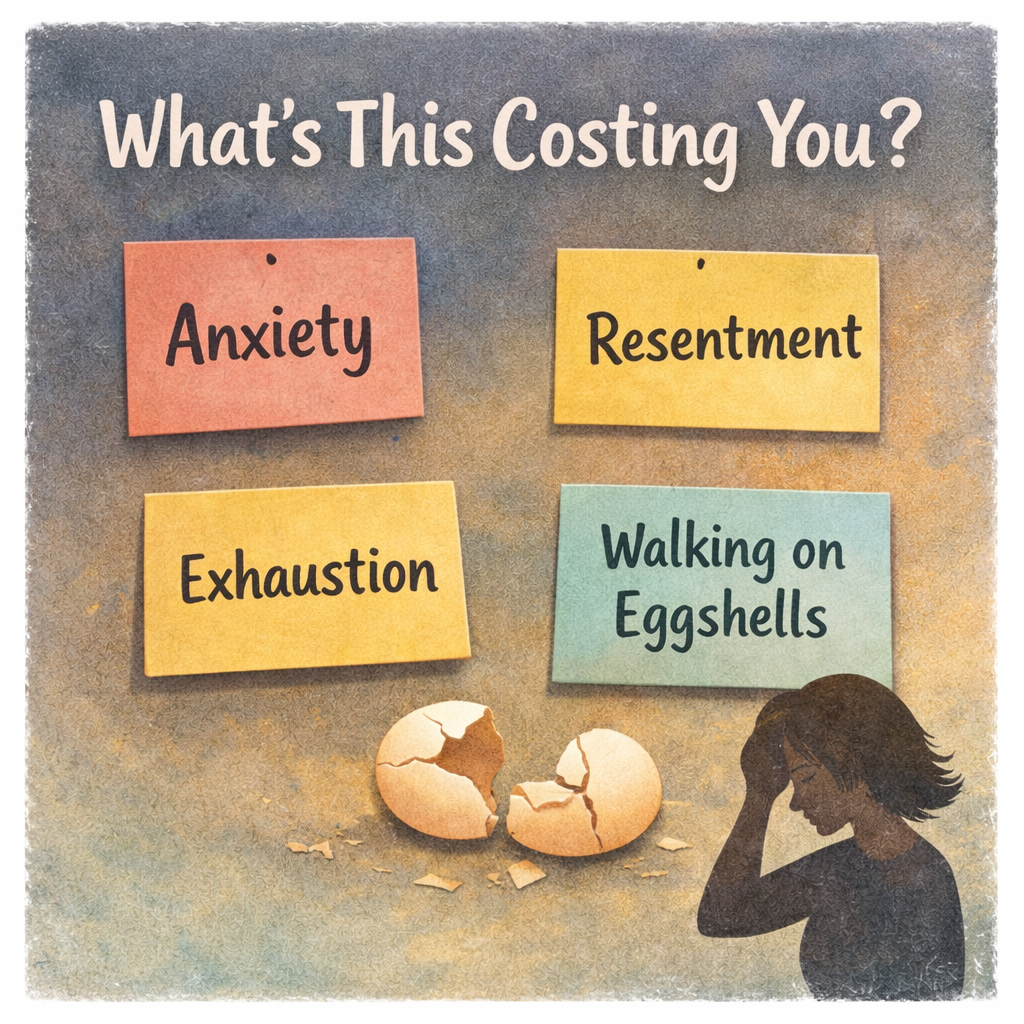
For me, the cost showed up as anxiety, headaches, resentment, and that constant feeling of walking on eggshells. I could love family members and still feel unsafe around them. That was a confusing truth to hold. It drained emotional energy. It created emotional exhaustion. And it chipped away at my self-esteem and my sense of well-being.
When you’re around difficult family members, the price can be invisible until you finally step back and admit the truth: “This is impacting my mental health.” Healthy boundaries start with that honesty.
Step Two: Do the Internal Work (Annoyingly, This Part Matters)
I have been in therapy on and off for most of my adult life. I’ve had good therapists. But six months ago, I started working with someone who didn’t just validate me—she helped me change.
She helped me understand that trauma isn’t only what happened to you. It’s also what you learned to believe about yourself because of what happened.
I used to minimize my own pain with the classic line: “I had food and shelter. I wasn’t hit. I wasn’t abused. I don’t have trauma.”
But I carried shame like it was part of my personality. I struggled with relationships. I struggled with anxiety. I struggled with suicidal thinking. And I couldn’t understand why because I had convinced myself my story didn’t “count.”
Then I started seeing the pattern. I learned love could be conditional. I learned approval had to be earned. I learned criticism could wear the mask of “help.” And later, I married someone who echoed that dynamic. Not with dramatic cruelty, but with enough steady commentary to keep me feeling not-quite-good-enough.
One sentence can train your brain over time: “If you put as much effort into cleaning as you do your nails…”
That type of messaging doesn’t just hurt your feelings. It shapes your identity. It impacts emotional well-being. It rewrites what you believe you “deserve” in family relationships and in healthy relationships.
Step Three: Identify Your “Non-Negotiables” (And Let Them Evolve)
You don’t need a 50-item boundary list. Start with the categories that drain you the most:
- mental health
- time and energy
- emotional safety
- finances
- work-life balance
My non-negotiables have changed as I’ve healed. That’s normal. It’s also a sign you’re growing a strong sense of self.
At one point, my biggest non-negotiable became simple:
My kids get the best of me, not the leftovers.
That single value forced me to look at how I was living: my own needs, my own boundaries, my personal limits, and my own life. It forced me to ask what appropriate boundaries would look like for our family dynamics, especially when family expectations were pulling me in too many directions.
If you’re trying to establish healthy boundaries, start by naming what protects your well-being. Healthy boundaries should support emotional health, not constant emotional burnout.
Step Four: Start With a Boundary You Can Actually Hold
This is where most people fail, not because they don’t know what to say, but because they start too big.
I did this the way I do everything: intensely, immediately, and with a secret hope that it would “fix” me overnight. (Example: My therapist said, “Dip your toe into dating,” and I downloaded four apps like I was speed-running a life transformation.)
Boundaries don’t work like that. They’re not a personality upgrade. They are practiced behaviors. The easiest “starter boundary” for me was work.
I’m a special education teacher. I’ve lived the reality of no prep, skipped lunches, and the expectation that paperwork magically completes itself. For years, I spent weekends in my classroom for eight hours at a time trying to stay afloat. Eventually, my own kids told me the truth: I was there… but I wasn’t present.

So, I did something I wish I’d done sooner: I stopped donating my weekends to a system that would never stop asking for more. I advocated for scheduled prep time and paperwork time, and I stopped normalizing the idea that burning out was part of the job.
That was boundary setting. That was setting limits. That began setting boundaries in a place I could actually control.
That year, I had more than 30 students. They grew, but not as much as I wanted. That was hard to sit with because teachers don’t want “good enough.” We want more for our kids.
But two years later, I can say this: holding that boundary made me a better teacher in the long run, because it made me a healthier human. It protected mental health. It protected emotional energy. It supported self-care.
Boundaries require trade-offs. But so does living without them.
And here’s the surprising part: once I learned I could maintain boundaries at work, I realized I could maintain boundaries with family too. Establishing boundaries in one area made establishing boundaries in another area feel possible.
Step Five: Say It Simply (And Resist the Urge to Write a Novel)
This was my hardest skill. I am a “story” person. I can justify a boundary so thoroughly that I end up explaining my childhood to a stranger who asked me to volunteer. That’s what blurred boundaries can do: they turn a simple “no” into emotional exhaustion.
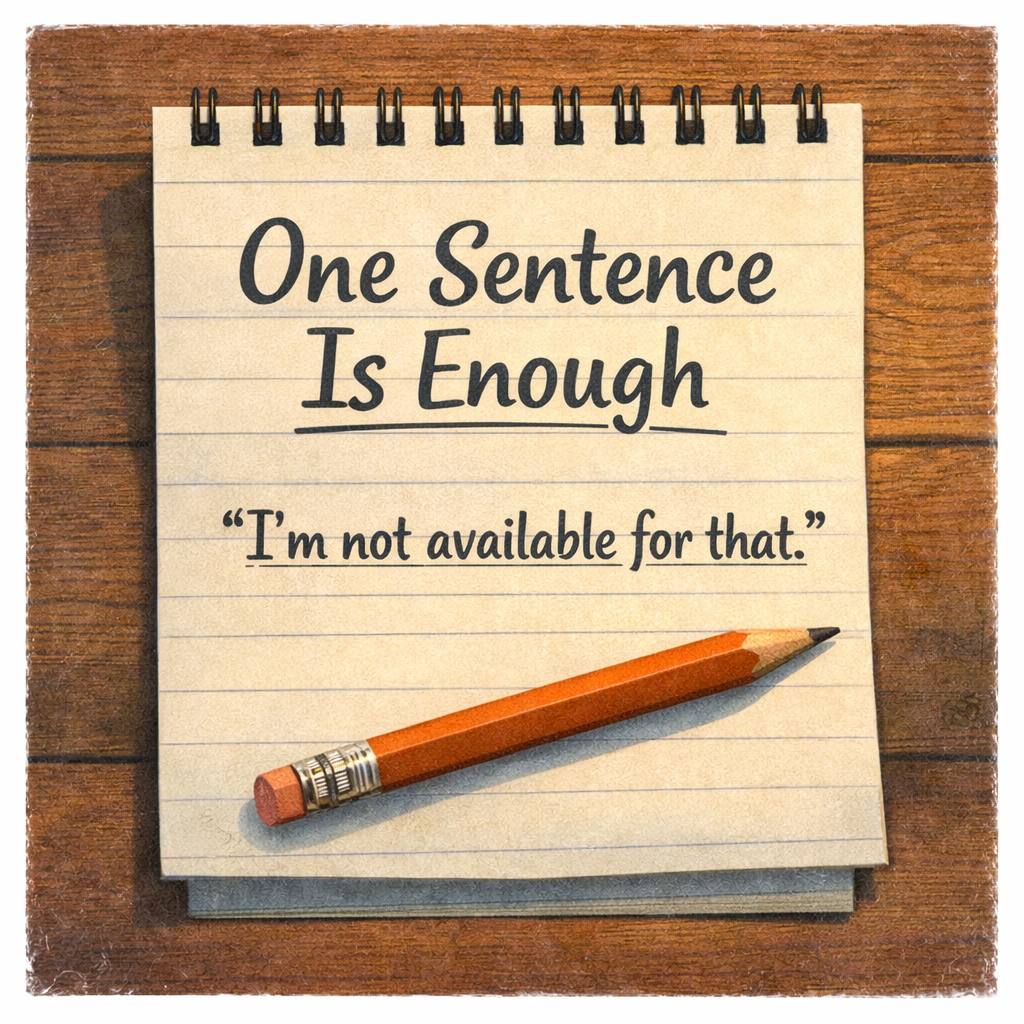
So I had to learn that a boundary is one sentence. Examples that worked for me:
• “I’m not available for that.”
• “That doesn’t work for me.”
• “I’m not comfortable with that.”
• “I can help for one hour, not the whole afternoon.”
If you feel yourself gearing up to over-explain, try this:
Say the sentence. Stop talking.
Let silence do some of the work.
There are situations where a brief explanation supports collaboration with work teams, healthy relationships, parenting, and close friendships. That’s an example of appropriate boundaries in respectful relationships: you can use clear communication to support mutual respect.
However, if someone consistently pushes your limits, your explanation becomes a negotiation invite. And your boundary is not a debate club. That’s when you use the broken record method: state the boundary, repeat it, and end the conversation if needed. Broken record. Broken record. Broken record.
Clear boundaries protect personal boundaries. Clear boundaries protect emotional boundaries. Clear boundaries protect physical boundaries. Clear boundaries protect well-being.
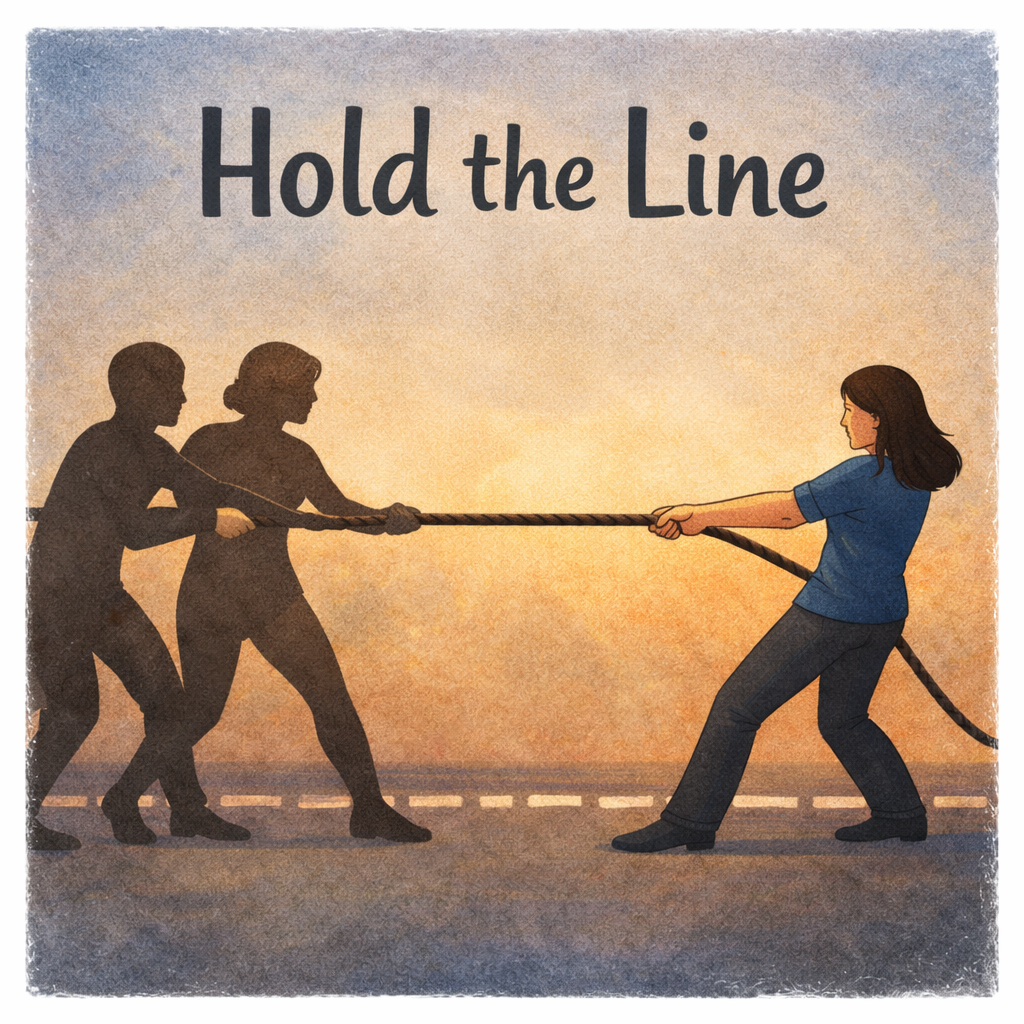
Step Six: Hold the Line (Even When They React Badly)
This is the real work. Because the moment you set a boundary, you’ll learn who benefited from you having none.
Setting boundaries with family can be the hardest kind of boundary setting because family members often feel entitled to your time, your emotional energy, your personal space, and even your personal belongings. I learned this the hard way.
It took me years to stop managing my mom’s mood. And it took consistent effort, over time, to tell her that passive aggression, condescension, and negativity were not welcome around my kids or me. I didn’t do it perfectly. We’ve had arguments that belonged on Jerry Springer (minus the chairs flying and a lot more vocabulary).
I’ve tried in-person conversations and learned that sometimes the healthiest thing is to put it in writing when emotions escalate quickly. That’s not avoidance. That’s maintaining healthy boundaries when you know the pattern.
When I stopped dropping everything to help, she accused me of only helping people with money. That accusation wasn’t true, but it was revealing. Here was the truth: when I helped, it often came with criticism, guilt, and emotional aftermath that I had to medicate through. I didn’t say no because I didn’t care. I said no because the cost was too high.
And that’s a boundary in its purest form: I care, and I’m not doing this anymore.
This is what boundaries with family members can require: consistent boundaries, appropriate consequences, and realistic expectations. It can also require accepting that difficult family members may respond with emotional manipulation, boundary violations, or toxic behavior. That response is information. It is not an instruction.
If it helps, think of it this way: healthy family boundaries aren’t about winning an argument. Healthy family boundaries are about protecting mental health, emotional well-being, and a harmonious family dynamic—when that’s possible. And if a harmonious family dynamic isn’t possible with someone, healthy family boundaries protect you anyway.
Sometimes, you also need extra support. Talking to mental health professionals can help. Family therapy can help. Support groups can help. Emotional support matters when you’re trying to keep setting boundaries with difficult family members and other family members who may disagree.
What Learning to Set Boundaries Can Look Like (With Real Examples)
Time boundaries:
“I don’t answer messages after 8pm.”
“I can volunteer once a month, not every week.”
(Teachers: you are allowed to stop working for free.)
Emotional boundaries:
“I’m not responsible for fixing your feelings.”
“I’m not going to argue about my decision.”
Physical boundaries:
“Please don’t touch me.”
“I need personal space.”
“I’m not okay with you going through my personal belongings.”
Intellectual boundaries:
“We can disagree without convincing each other.”
“I’m not continuing this conversation if it turns disrespectful.”
These are personal boundaries. These are appropriate boundaries. These are clear boundaries. These are the boundaries that protect healthy boundaries and healthy relationships.
They can also support healthier interactions in family interactions, especially when you’re dealing with difficult family members.
A Simple Checklist (For the Moment You Freeze)
If your body goes into panic the second you need to set a boundary, use this:
☐ What am I feeling in my body right now (tight chest, nausea, shaking, shutdown)?
☐ What is the exact request being asked of me?
☐ Do I want to do this—or do I feel obligated?
☐ What will it cost me afterward?
☐ What is one sentence I can say?
☐ What will I do if they push back?
One sentence. One line. One follow-through. That’s boundary setting. That’s setting boundaries. That’s setting healthy boundaries. That’s establishing boundaries, and it’s also maintaining healthy boundaries.
If you’re trying to set family boundaries, write the sentence before the family gathering. Practice it. Repeat it like a broken record. Decide on appropriate consequences ahead of time. Give yourself quiet time afterward. That’s self-care. That’s protecting emotional energy. That’s protecting emotional health.
The Truth I Wish I’d Learned Earlier
Setting boundaries doesn’t make you cruel. It makes you safe. It builds self-respect. It supports self-esteem. It protects mental health. It protects emotional health. It protects psychological well-being.
If you’re new to this, start small. If you backslide, don’t shame yourself. Changing family dynamics takes time, especially when family members are used to blurred boundaries. Setting boundaries with family is hard. Setting boundaries with family members is harder. Setting boundaries with family is still worth it.
If someone reacts badly, remember: their reaction is information—not instruction.
You are allowed to choose yourself. You are allowed to respect boundaries. You are allowed to establish healthy boundaries. You are allowed to maintain boundaries. You are allowed to keep setting limits.
Even at 42.
Especially at 42.
Family Boundaries FAQs
Q: How do I start setting boundaries with family members if I feel uncomfortable?
A: Start with practical strategies and clear communication. Begin setting boundaries in small ways—time limits, topics you won’t discuss, physical boundaries like personal space. Feeling uncomfortable is normal when you’re changing family dynamics.
Q: What if I’m dealing with difficult family members who keep pushing?
A: Expect boundary violations and pushback. Use the broken record method. Maintain boundaries with consistent boundaries and appropriate consequences. This supports healthier interactions over time.
Q: What if family expectations or family gossip pull me back in?
A: Family gossip thrives when family boundaries are unclear. Decide your personal limits and step away. Protect your emotional energy. Give yourself quiet time. Focus on balanced relationships and mutual respect where possible.
Q: When should I get outside support?
A: If toxic behavior, emotional manipulation, or repeated boundary violations are impacting your mental health, consider mental health professionals, family therapy, or support groups. Emotional support can help you keep setting healthy boundaries.
Quick Reminder for Anyone Learning to Set Boundaries
Healthy boundaries protect your own boundaries. Healthy boundaries protect your own needs. Healthy boundaries support healthy relationships and respectful relationships. Healthy boundaries support mutual respect and positive interactions. Healthy boundaries can support positive relationships and balanced relationships.
Family boundaries matter. Family boundaries protect personal boundaries, emotional boundaries, and physical boundaries. Family boundaries support healthy family boundaries and healthy family relationships. Family boundaries help you establish healthy boundaries, maintain boundaries, and keep maintaining healthy boundaries—even when difficult family members push back.

























This hit home!