By Aaron Poochigian
This is a story of how Central Park saved me from a cocaine addiction.
I’ve been all-in on poetry since I was eighteen. I stumbled upon lines of Latin epic poetry in a book and, “ah!,” like angels singing, I knew I was supposed to be a poet. That story may sound a bit fantastical, even a bit cheese-ball, but the epiphany really went down that way.
Since then, I’ve put a lot of pressure on myself to perform, you know, to keep writing, writing, writing like there’s no tomorrow. For richer and for poorer (and mostly for poorer), I’ve done my damnedest.
Like everyone else, I had a hard time during COVID. I live in the East Village of Manhattan, a neighborhood famous for its nightlife.
Well, during lockdown, it became a ghost neighborhood. I mean, yes, we could still go out, but we couldn’t have any fun. Talking to people with my face pressed up against a laptop screen on Zoom calls really wasn’t doing it for me.
I tried to drown my sorrows in writing, and it worked for a decent amount of time, but then my concentration would give out, and I’d have to face the tedium of isolation again.
There was nothing to look forward to.
Enter the Beginning of My Cocaine Addiction
I’d tried cocaine recreationally in the past. I’d always said to myself, “It’s good you don’t have regular access to this drug because you’d become addicted to it.” Well, I confess I sought out a dealer, at first just to give myself something to get me out of the lockdown doldrums now and then.
Soon, though, (of course) I was taking cocaine regularly, daily.
I didn’t use it to party; there was no partying going on during COVID, anyway. It was like catnip to me in the beginning. I thought of it as a performance-enhancing drug. It helped me focus and keep working. My addiction story goes the same as they usually do.
At first, cocaine solved all my problems. Then I needed it to feel normal. Then I needed it to keep from crying.
Eventually, I was no longer looking forward to anything beyond my drug of choice.
My Cocaine Addiction Helped Me Escape From Reality
My present involved escaping from the stale reality of lockdown through immersion in being high and writing. My only thoughts about the future focused on figuring out how to get the money to buy more cocaine. I knew I’d have to stop (or I’d have a heart attack), but I kept procrastinating, kept telling myself I’d buy another bag just one more time, one more time.
My life had no routine, no relationship to clocks, sunrise, or sunset. I’d stay up writing for sixteen- to-twenty-hour stretches. Sometimes, after working through the night, through the morning and through the afternoon, I’d finally crash and sleep for a little while before waking up to eat breakfast, my only meal, at, say, ten pm.
Then my creative juices dried up. My enthusiasm flagged, and the ideas stopped coming. I had to admit that I was only human and couldn’t live for work and coke alone.
I needed fresh experiences and stimulating conversations. My addiction had left me disconnected from my friends and family. I didn’t want any of them to see what had become of me. My rock bottom was a feeling of artistic sterility and utter isolation. I felt like I was imprisoned in glass—able to see the world but unable to participate in it.
My Introduction to Forest Bathing
The addiction specialist Johann Hari says that “the opposite of addiction is connection.” Both for my personal health and the health of my work, I made a choice to try to reconnect with the world. I needed to start all over with the fundamentals—you know, like appreciating being alive. I’d read about shinrin-yoku, Japanese “forest-bathing,” and it sounded like a way back in.
With that, you don’t just take a walk in the woods; you take a walk in the woods while purposefully and attentively absorbing the sensory details you encounter. So, instead of inhaling what would get me high, I started taking in the sights, sounds, smells and textures of Central Park for a few hours every day.
The word “resilience” comes from the Latin verb resilire, meaning “to jump back”—a combination of re– (“back”) and salire (“to leap”). I jumped back into the world by going from attraction to attraction in the park.
I’d been in the habit of being high every waking moment, and it was hard at first to abstain even for those few hours a day. Eventually, I started writing about my experiences in the park, and the rule was: no drugs while I was in it or writing about it. It helped that I’d come to believe cocaine was detrimental to my creative work.
I did fall back into the nasty old habit now and again, I confess, but my fascination with the park ultimately supplanted my addiction.
Central Park Will Always Be a Part of My Cocaine Addiction Story
There was the flamboyant beauty of the koi in the Pond. There was learning how to distinguish an Eastern Bluebird from a blue jay. I remember being grateful to be able to smell the almond tang of the blossoms on Cherry Hill. Because of the permanent sinus infection my addiction had caused, I hadn’t breathed through my nostrils for a year and a half.
I developed a special affection for the Ramble, which is the most densely packed of the park’s forest environments. I did become anxious at first when I lost my sense of direction there.
With time, though, I learned to give way to the feeling of being fully off the grid. Heck, I came to enjoy getting lost in its maze of trails. Cocaine had made me collapse inwardly and inhabit only my own mind. The park pulled me out of myself into new sensations and prospects, and it became, in a few months, where I preferred to be.
Now, several years into my recovery, the park has gone from being a new friend full of surprises to an old and reliable one. I know its moods and quirks. I’ve watched the blossoms flare and fade and the geese migrate in and out. Still, its depths, I suspect, are infinite, and I’ve come to cherish the calm, attentive sobriety it has bestowed upon me.
***
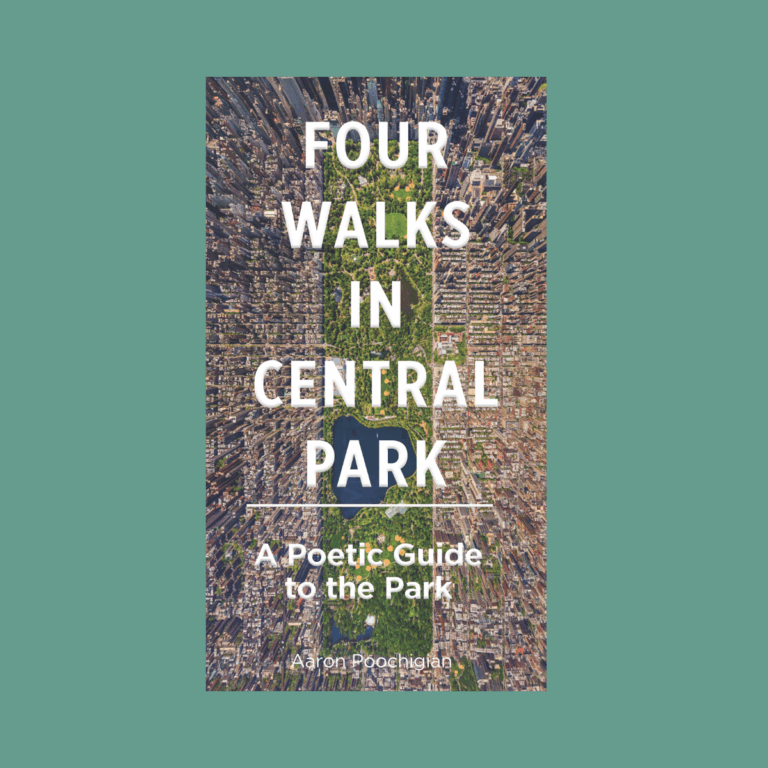
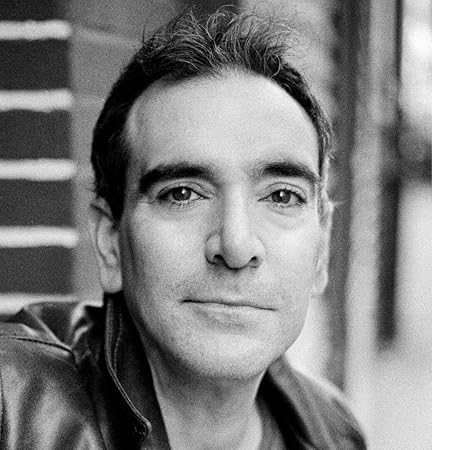
Aaron Poochigian is a poet, classics scholar, and translator who lives and writes in New York City. His many translations include Stung with Love (Penguin UK) — a translation of Sappho, and Marcus Aurelius’ “Meditations” (forthcoming from W.W. Norton). His work has appeared in such newspapers and journals as The Financial Times, The New York Review of Books, and Poetry Magazine. His new book is Four Walks in Central Park: A Poetic Guide to the Park.





0 Comments