
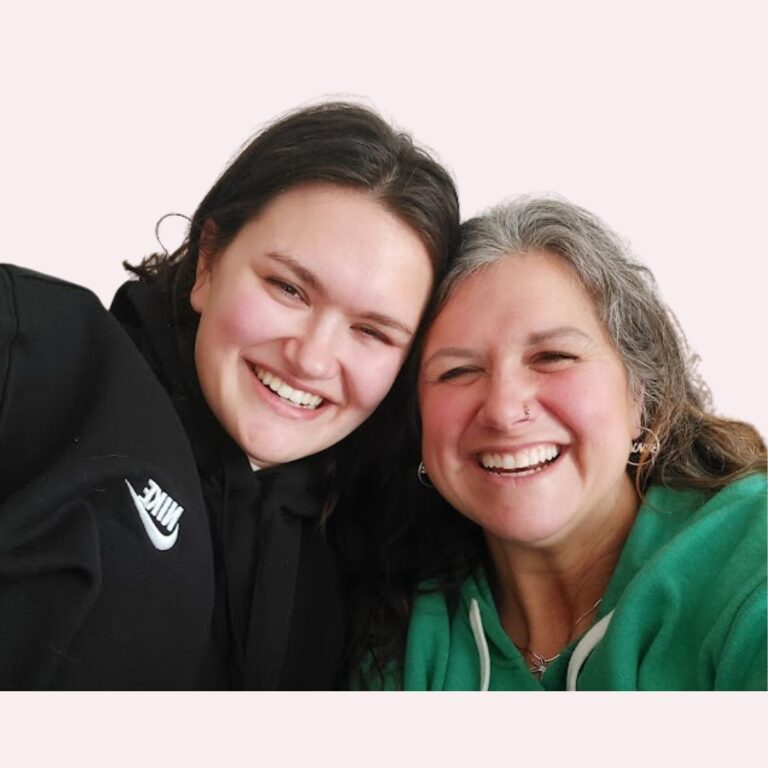
Navigating Maternal Grief and Loss
Written by: Onnie Michalsky
I never know where to begin when I tell Kaylah’s story. Do I start with her birth? With her childhood? Or with the moment my world split cleanly in two? Or do I begin at 2:30 in the morning on June 28th, 2024, when the police banged on my door and everything I thought I knew about life, safety, and time itself shattered?
I don’t know if I’m telling Kaylah’s story or mine. Maybe that’s the thing about losing a child… their story and yours become forever braided together.
Losing a Child Was Not Something We Knew Was Coming
Earlier that night, I was very much alive. I was at a summer concert in downtown Billings, listening to Repeat Offenders, letting the music be loud enough to drown out the noise of everyday life. I had briefly thought about asking Kaylah if she wanted to go.
She lived downtown, and I passed her street on the way and glanced down it out of habit. But Kaylah wasn’t usually into those kinds of things – crowds, bars, loud spaces – so I talked myself out of calling her.
That decision will live with me forever.
I went to bed around 10:00 p.m. My twins were home, and my sister-in-law was staying with us. My husband was across the state with our two youngest daughters, remodeling his parents’ house. Nothing about the night felt unusual. I fell asleep with 80’s songs running through my head.
The Moment My World Split Cleanly in Two: Before and After Losing a Child
At 2:30 a.m., I was jolted awake by loud banging on our front door.
I walked to the window and parted the curtain just enough to see a Billings Sheriff’s car parked out front. I opened the door a crack and told the officer I needed a moment to put on a robe. Our bedroom is right by the front door, and in the time it took me to throw on that robe and let him inside, my half-asleep mind floated through possibilities.
Maybe there was an accident, and he was here to tell me which hospital to go to.
I think back on how calm I was, and it feels strange now. Why didn’t that thought alone alarm me? Why didn’t my body know what was coming?
The officer asked if anyone else was home. Then he asked if we could sit down. Everything slowed. We sat on the couch in the front living room, and then he said the words that replay in my mind every single day:
“Your daughter, Kaylah, passed away tonight.”
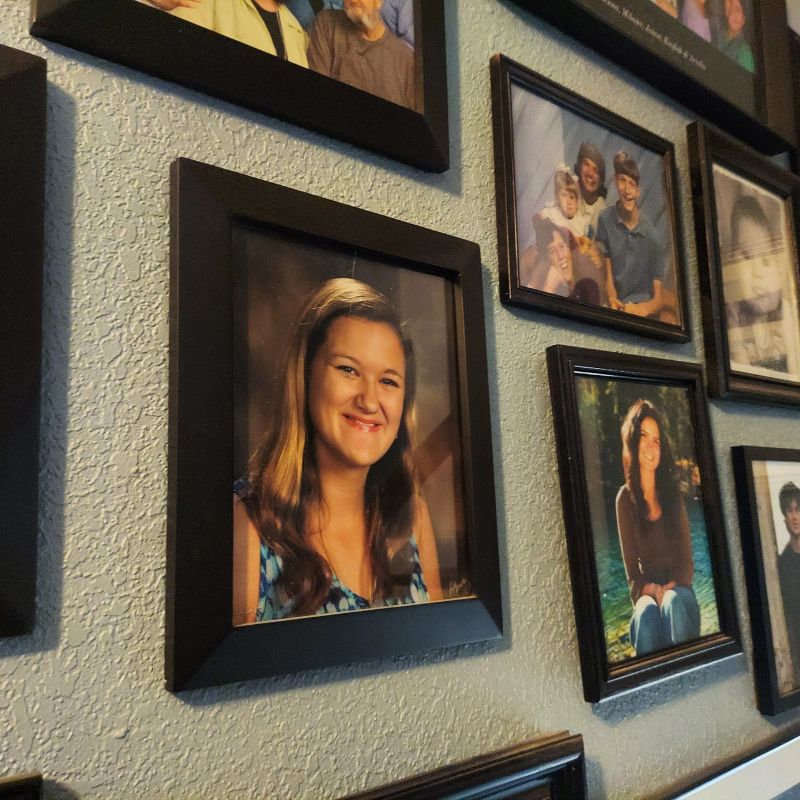
To this day, I couldn’t pick that man out of a lineup, but his voice – those words – are etched into me. I didn’t cry. I just sat there. My mind couldn’t make sense of what he had said. At some point, I stood up and walked to the stairway where our family photos hang.
I took Kaylah’s school picture off the wall and pressed it to my chest, as if I could hold her back into this world.
A Mother’s Unfathomable Pain
In a trance, I walked down the stairs as my sister-in-law was coming up, drawn by the dogs barking. Over the next half hour, the officer explained what little he knew. Although I was physically present, sitting on the couch, my mind was somewhere else entirely, trapped in disbelief, bargaining with God, and begging to see my baby girl.
I needed to see my Kaylah Belle.
Kaylah was twenty years old, and she was a ball of energy. A young woman, full of empathy and kindness, with a personality so big it filled every room she walked into.
On the morning she was born, the newspaper headline read: Isabel Reigns.
We had considered Isabelle as a middle name throughout my pregnancy, and then Hurricane Isabel arrived the day I went into labor. So she became Kaylah Isabelle, affectionately nicknamed Kaylah Belle.
And she lived exactly as that name suggests. She tore through life like a storm: unpredictable, powerful, and fierce. When Kaylah was a baby, she fought sleep like it was her sworn enemy. There were countless nights I lay on the couch, manually pushing the baby swing long after the batteries died.
When Kaylah was six, we moved across the country. We homeschooled Kaylah and her older sister when they were young.
Ariella devoured books. Kaylah wanted nothing to do with them. She learned her ABCs with sidewalk chalk and jump ropes, constantly moving, constantly creating.
She had a mind of her own from the start.
How it Feels When Your Child Struggles
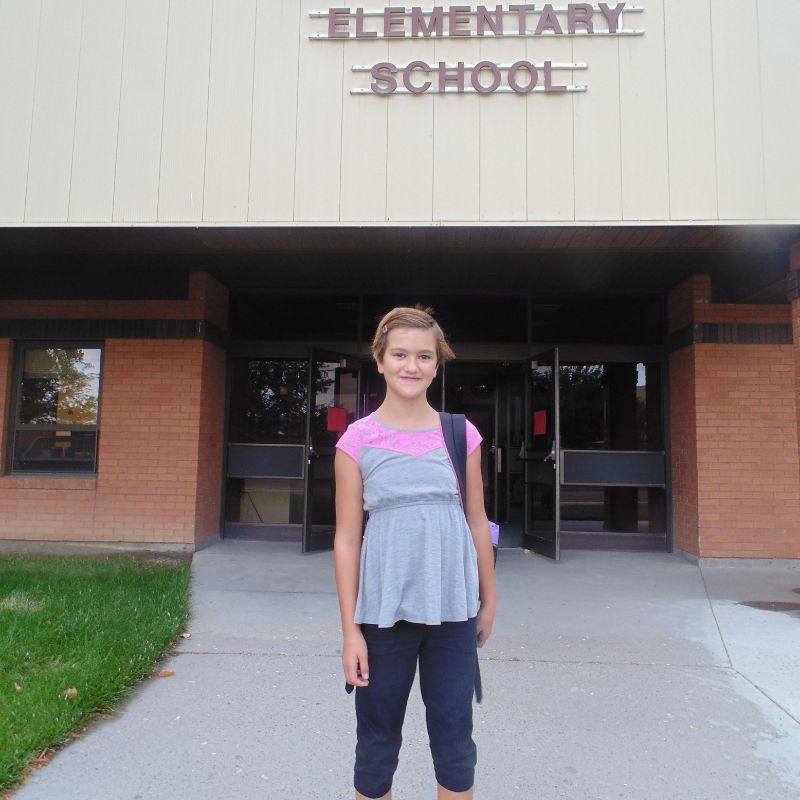
In fourth grade, Kaylah asked to return to traditional school. She wanted what she saw on the Disney Channel: lockers, friends, that version of “normal.” She and her younger siblings, twins Jason and Milana, went off to school. Kaylah hated it. By fifth grade, she wanted to homeschool again, so we pulled her out.
She tried again in sixth grade, but reading and math were never her strengths, and the small-town cliquishness of school life only made things harder. Junior high amplified everything.
She stuck it out until tenth grade, but by then, she was spending time with kids making poor choices, and she decided she didn’t want to continue.
Since Kaylah’s passing, I’ve learned a great deal about ADHD. I believe now that she lived with undiagnosed ADHD, which explains so much of her struggle with traditional education. We tried online schooling, but it wasn’t a good fit either.
Then she heard about the Montana Youth Challenge.
My husband and I were hesitant at first, but Kaylah was adamant. The program was designed for kids at risk of not graduating, which fit her situation, and we hoped it would give her structure and distance from the group she’d been spending time with.
She started in January 2020, and every week, Kaylah was allowed one phone call. And every week, she cried and told us how much she hated the program. When the program closed due to COVID, we thought that was the end. We felt defeated.
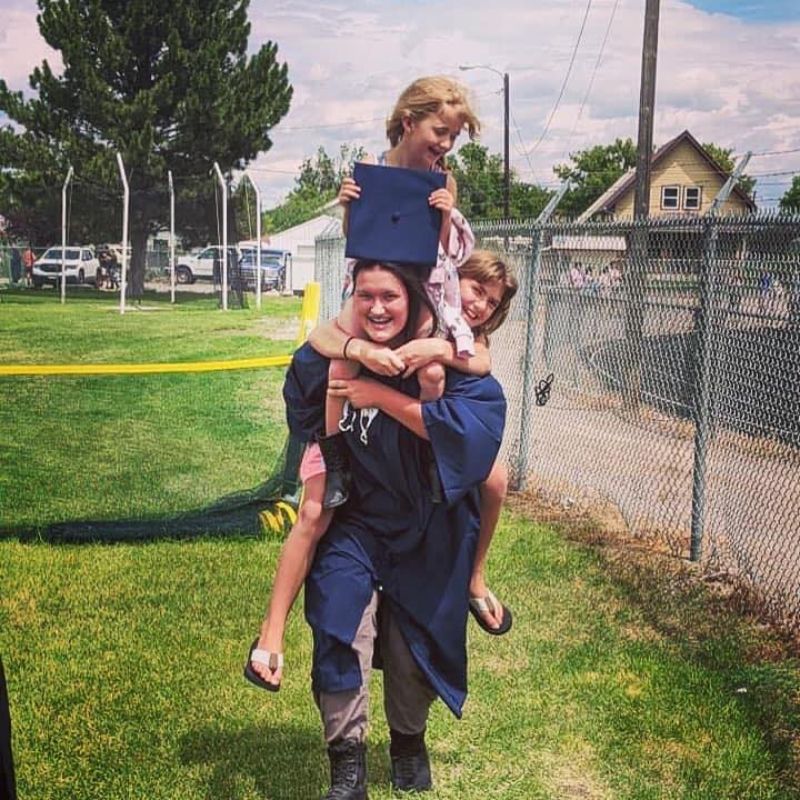
But something shifted while she was home; she had a change of heart, and when it resumed, Kaylah finished strong and graduated in June 2020. In the end, it became a meaningful experience for her.
Losing a Child and Living With the Unanswered Questions
That fall, we moved from Forsyth to Billings, which was our original destination when we left Pennsylvania in 2009, and it didn’t take long for Billings to become home.
Kaylah had a heart so big it often put her in danger. Her codependent tendencies led her to people she thought she could rescue. She loved deeply, sometimes to her own detriment, and she devoted herself to people who did not deserve her.
Her most recent relationship had lasted nearly two years. We wanted more for her than she wanted for herself, but we tolerated it because we didn’t want to lose Kaylah. We made sure to see her a few times a month and talk to her a few times a week.
As a twenty-year-old, she was trying to make her way in the world, and we trusted the values we’d given her.
Here is what we know based on Ring footage, police and autopsy reports, body cam footage, statements from her boyfriend and his family, and our own investigation.
Kaylah’s Final Hours
Around 4:00 p.m. on June 27th, Kaylah was home when her boyfriend arrived in her car. They argued, and Kaylah took five bupropion pills (Wellbutrin), an antidepressant prescribed just one week earlier. Bupropion is a time-released medication.
She was angry and overwhelmed. Really, she just wanted the pain to stop. She was not suicidal.
Her boyfriend called 911 immediately. But Kaylah left the house barefoot, upset about their argument. When the police arrived, they arrested her boyfriend for outstanding traffic and parking warrants. He begged them to wait until she returned before taking him.
He was the one who had called for help, and he wanted to make sure they took care of her.
Kaylah came back and spoke to him briefly as he sat in the back of the patrol car. Then they drove away, and Kaylah walked inside the house.
Two other officers approached Kaylah and told her to come outside and sit on the curb while they waited for an ambulance to come check her out. She complied. She sat there, visibly upset, while an officer stood several feet away, scanning the street for the ambulance.
He didn’t sit with her. He didn’t ask what happened, where she was from, how she was feeling, or if there was someone they could call.
The ambulance arrived, and after checking her vitals, they called an ER doctor, who said she didn’t need to come in. Because Wellbutrin is time-released, nothing immediately appeared wrong.
They had her sign a refusal-of-care form. We found that form the next morning, and in small print, it states that refusal could result in death. It also states that the signer must be of sound mind.
Someone who has just ingested five pills in distress is not of sound mind. No safety plan was created. No family was contacted. She wasn’t taken to the ER or crisis center. No welfare checks were done. Kaylah was left alone with her boyfriend’s sister, who didn’t live there and wasn’t planning to stay.
Losing a Child Didn’t Just Impact Me
Eight hours later, Kaylah seized and went into cardiac arrest.
A roommate who arrived home found her shortly after midnight, kneeling on the floor in a posture that looked like prayer.
The next few weeks were a blur. Family and friends came from the East Coast. We cried, we remembered, and we mourned.
Kaylah left behind five siblings and her beloved dog, Luna, who is now with us. She often comes to my office, our accidental therapy dog.
Later, when I asked my children why they think Kaylah didn’t call us after taking the pills, I assumed she felt shame. They said something else: “She didn’t know she was dying.” I believe that may be true.
Kaylah showed none of the typical signs of suicidal intent. Her journal was full of plans: recipes she wanted to try, meditations she was doing, and future goals.
Just a week earlier, she’d been at our house learning how to budget. Her phone’s search history showed she might have drunk gallons of water that night, trying to flush out the medication.
She adored Luna. If she believed she was dying, she would have made sure Luna had a home. All the signs pointed to the fact that Kaylah did not want to die.
Losing a child is the worst pain imaginable. It violates the natural order of things, but my faith has been my greatest lifeline. I believe Kaylah is with Jesus now, and I often ask Him to hug her for me.
How Life Looks After Losing a Child
I go to the cemetery every week. I weep because my heart is shattered, and I know it will never fully heal, and I’m okay with that. That hole exists because Kaylah exists.
I carried her for nine months. I raised her for eighteen years, and I certainly didn’t stop loving her at twenty.
Yet, I now live without my child. I can no longer hold her in my arms, brush her hair from her cheek, or whisper that I love her in her ear.
I want first responders to know how to talk to someone in crisis, to lead with compassion, and to understand mental health. I am certain judgments were made that day about her neighborhood, her relationship, and her worth.
I am trying to forgive.
But in this day and age, ignorance is no longer acceptable. Kaylah should still be on this side of heaven. She should be planning her future, laughing with her siblings, cuddling Luna on the couch, and calling me when life feels heavy.
She should be learning who she is becoming. Instead, we have to visit her at a cemetery. And while I cannot change what happened that night, I refuse to let Kaylah’s story end in silence.
I share this not for sympathy, but for awareness. For accountability and for change. Because there are other Kaylahs out there. Young people who feel overwhelmed, who make impulsive choices in moments of pain, who need someone to sit beside them on a curb and say, “You matter. Help is coming. You’re not alone.”
There are other mothers who deserve to keep their daughters.
My daughter didn’t need to die. What she needed was compassion and connection. She needed someone trained to recognize a crisis and respond with humanity.
Kaylah was not a statistic. She was a daughter. A sister. A friend. A young woman with dreams still unfolding.
Most of all, she was my baby.
I will carry her with me for the rest of my life – in every breath, every prayer, every quiet moment when grief sneaks up on me, and every loud moment when love overflows. I will speak her name.
I will tell her story. I will fight for better mental health care, better crisis response, and deeper compassion for those who are struggling.
Because Kaylah mattered, and she still matters.
And if sharing her story saves even one life, then her light continues to shine – right here, on this side of heaven.
















0 Comments