
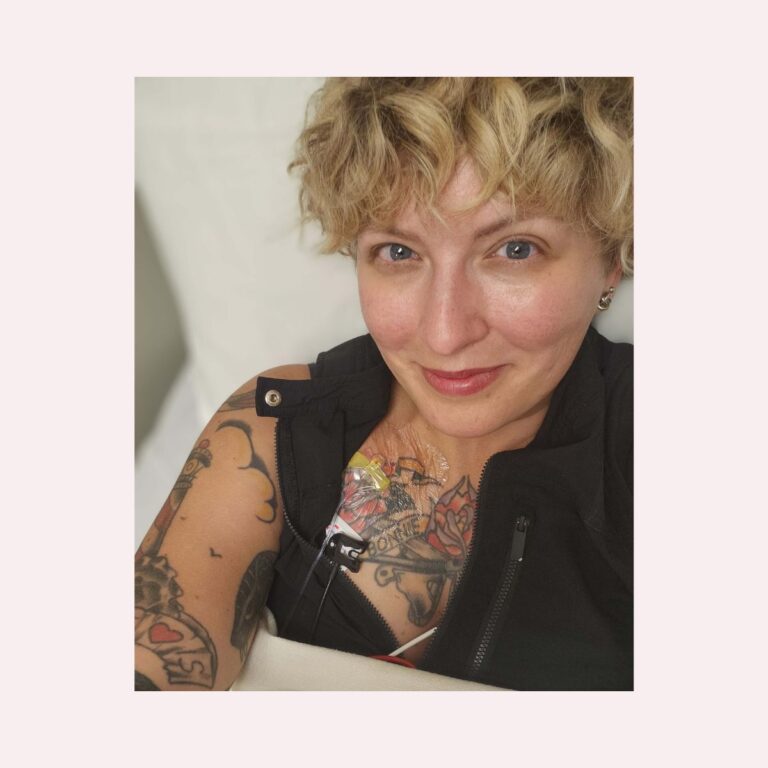
What does life with kidney disease look like? Each morning begins with a body scan. The first thing I notice is nausea.
It’s usually not intense enough to warrant an emergency greeting with a toilet seat, but the sudden urge to urinate often is.
On my way to the bathroom, I’ll assess my fingers, ankles, and the pads of my feet for swelling. I’m quick to notice headaches or muscle cramps that are typical at stage four.
I’ve been in chronic pain for so many years that, surprisingly, it might relent just long enough for me to pee.
In those brief seconds, I experience a sort of freedom beneath the cloud of fatigue.
The familiar stab deep within my right side ushers me awake faster than the single caffeinated beverage I’m permitted.

Life With Kidney Disease: How it Once Looked
My days didn’t always start like this. Just a few years ago, I’d be ready to walk out the door in the time it now takes me to find enough momentum to get out of bed.
Some days, that energy eludes me for hours. After awakening from the calls of my then-two-year-old, I’d thrust my long limbs into a stylish outfit carefully selected the night before. Foundation, mascara, and lip color were critical to leaving the house, as were my Fitbit and a thermos of piping-hot coffee.
My spouse and I would drop our son off at the expensive Montessori school before carpooling the 20-minute commute to work. I had finally landed a job writing full-time for a regional design firm. It was my first position after completing a master’s degree online at Georgetown University.
I left my undergraduate alma mater after nearly a decade, working mostly in student affairs. All those long days turned late nights breaking to eat (sometimes), breastfeed, and catch a few hours of sleep culminated in a role doing exclusively what I loved—storytelling.
A year in, I received a great bonus, raise, and accolades from the leadership team. More money came in handy for the large mortgage we’d taken on in purchasing our family’s would-be forever home. It seemed I had everything I’d always hoped for.
Until the Moment I Didn’t
January 12, 2022, changed everything. It started as a normal day, and I was typing away on a copywriting project at my desk. Suddenly, a searing stab in my back took my breath away. I tapped my fingertips lightly on the keys beneath them, breathing through the pain.
When it didn’t let up, I reached for the Tylenol tucked in my desk drawer. But I’d barely gotten four tablets down my clenched throat when the tears began. Through bleary eyes, I sent a message to my boss.
She peered at me through the nook where four of us decorated in plants, tokens of home, and uproarious laughter. But the sounds that escaped me in rapid succession this morning were not of joy.
I tried to keep the painful sobs subdued as teammates ushered me into my Subaru, driven to the curb by my husband. He took me to Billings Clinic, where an MRI confirmed a cyst ruptured on my right kidney.
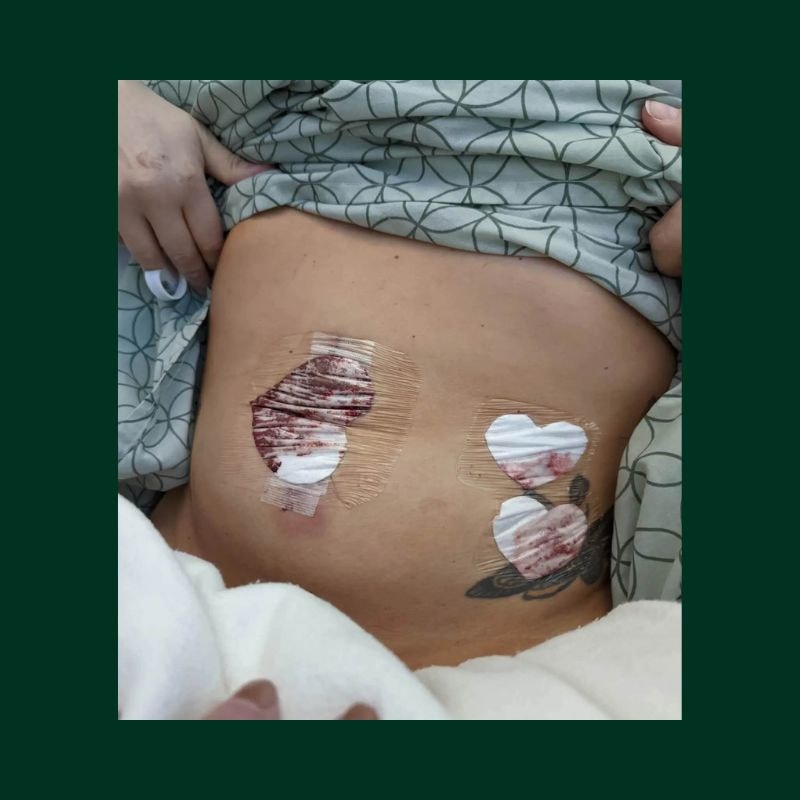
Imaging tests like MRIs, ultrasounds, and CT scans are often used to evaluate kidney structure and damage. Other tests, such as blood and urine tests, are also commonly used to assess kidney function and identify underlying causes.
Kidney removal surgery, called nephrectomy, is typically a laparoscopic procedure. I had my overgrown left kidney removed in 2023.
I Was Not a Stranger to Chronic Kidney Disease
Most people are born with two functioning kidneys, which normally remove waste, chemicals, and extra fluid from the blood to maintain the body’s balance. With kidney disease, fluid retention (edema) is common and can cause swelling; some diseases lead to the kidneys failing to remove waste at all.
I was diagnosed with a degenerative, genetic condition called Polycystic Kidney Disease in childhood and had cyst ruptures before. PKD causes uncontrolled cyst growth, which overtakes healthy tissue and usually requires a kidney transplant in old age.
I knew the drill: an onslaught of narcotic medication, admission, and monitoring for infection.
Having experienced this at least annually since adolescence, I thought I’d be home in a few days; full recovery typically took two weeks.
Some time into my hospitalization (hours blur together on substantial doses of Fentanyl), I went septic. It would be even longer before I could return home to my child, whom I had never been away from overnight.
Since COVID-19 restrictions meant only a single adult visitor daily, I was eager to get back to my family. Fortunately, they pumped some heavy-duty antibiotics into my system and sent me on my way. I was soon resting in my bed on my heating pad at home, waiting patiently for the pain to subside.
My Kidney Health Still Dictates My Life
It is now January 2026, and I am still waiting. The 16 months that followed were spent in bed, either my own or one in the ICU and ICC hospital units. My existence had dissolved from being a vibrant, driven, ferociously independent career woman to one consumed by relentless, debilitating kidney pain.
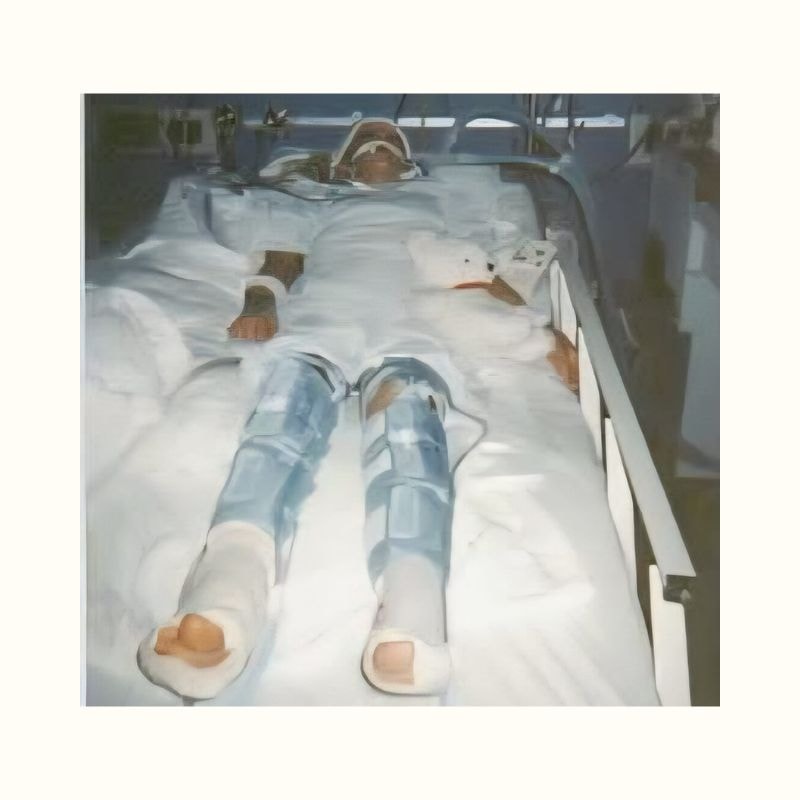
The toll this took on my mental health and sense of self-worth was tremendous. I could barely bathe myself, let alone work or adequately care for a toddler. The weight of a newly single-income, virtually single-parent household began to deteriorate my marriage.
Feeling utterly hopeless and alone, my mom moved from Florida to help share household responsibilities and become my live-in caregiver.
She pushed me in a wheelchair to myriad appointments and procedures. Things like blood pressure monitoring, urine tests, and tests that measure red blood cells.
When I exhausted local resources, she accompanied me on Angel Flights to medical facilities in other states.
Learning My Case Was More Than Chronic Kidney Disease (CKD)
Two of these out-of-state excursions changed the trajectory of my life.
The first came when I visited Dr. Vicente Torres, a kidney doctor (nephrologist) known as the “godfather of PKD,” at Mayo Clinic in Rochester, MN. He specializes in diagnosing and managing PKD and other chronic kidney diseases, helping patients control symptoms, slowing disease progression, and addressing complications.
Dr. Torres diagnosed me with a rapidly progressing variant of the disease that had advanced to significant severity for my age.
Although unsurprising, it was incredibly validating to be told there is a reason for the excruciating pain I endure. He prioritized slowing my progression toward kidney failure with a new treatment called Jynarque.
The specialty medication costs upwards of $22,000 per month, thankfully covered by Montana Medicaid. Unfortunately, Minnesota could not accept my insurance, so I was referred to Utah to take over my complicated case.
In Salt Lake City, I met a physician who had formerly worked alongside Dr. Torres in developing my PKD treatment. Where I’d run out of options in Billings, having tried everything from acupuncture to a nerve ablation, he saw a way forward.
My Kidney Damage Was Severe
I needed to have a kidney removed to reclaim some pain control and quality of life. Within months, I was recovering after surgery and hopeful for the prospect of more mobility and independence.
My post-op goal–to play on the floor with my son–was soon achieved. I could once again cook, shower, drive, and reduce my daily opioid dosage. For the next few months, I savored every moment spent out of bed.
I ticked off bucket-list items I dreamed of for nearly two years. A mother-son trip to the Pacific Coast, traveling abroad to Colombia, and skydiving helped me feel human again.
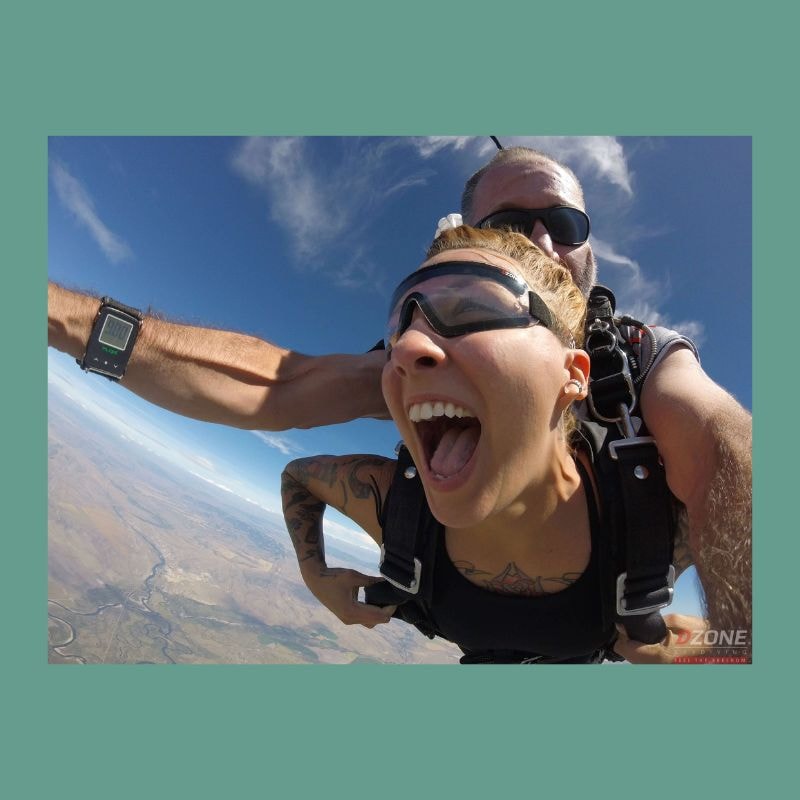
However, these experiences were punctuated by continued hospitalizations and weeks back in the bed I’d come to loathe. This level of symptom control failed to meet expectations that I’d have my “old life” back after such drastic measures.
Advanced Kidney Disease: The Casualties Beyond My Kidneys
The hope I had remarkably clung to while bedridden was gone, and I spiraled into a deep depression.
I started to tell myself that if I couldn’t revive the person I used to be, I no longer had value. Convinced that my family was better off without my burden, I attempted to overdose on medication.
My best friend, sensing something was wrong, saved my life that night. I was still breathing, but I also had to learn to grieve and move forward toward a new sense of purpose.
My marriage ended, our “forever home” was sold, and my kidney function continued to decline below 20 percent. At this stage, I qualified for a lifesaving kidney transplant and began the desperate search for a living donor.
Under the guidance of an outstanding therapist, I navigated this series of significant losses and change. The arduous process of accepting who I am without the things I once deeply valued is ongoing.
I now reside in Laurel, Montana, with my son in a small apartment for the disabled. Together, we eagerly await my perfect match and the possibility of a healthy kidney transplant.
Thanks to the monthly Lidocaine infusions in Utah, I have moderate pain control and less frequent visits to the emergency room.
I eat healthily, cherish time with a few friends and family, and hope to avoid visits to the dialysis center. It may not be the life I always wanted, but I count myself among the lucky for awakening each day.
And as my eyes open to reveal another morning, I repeat a meaningful mantra in my mind:
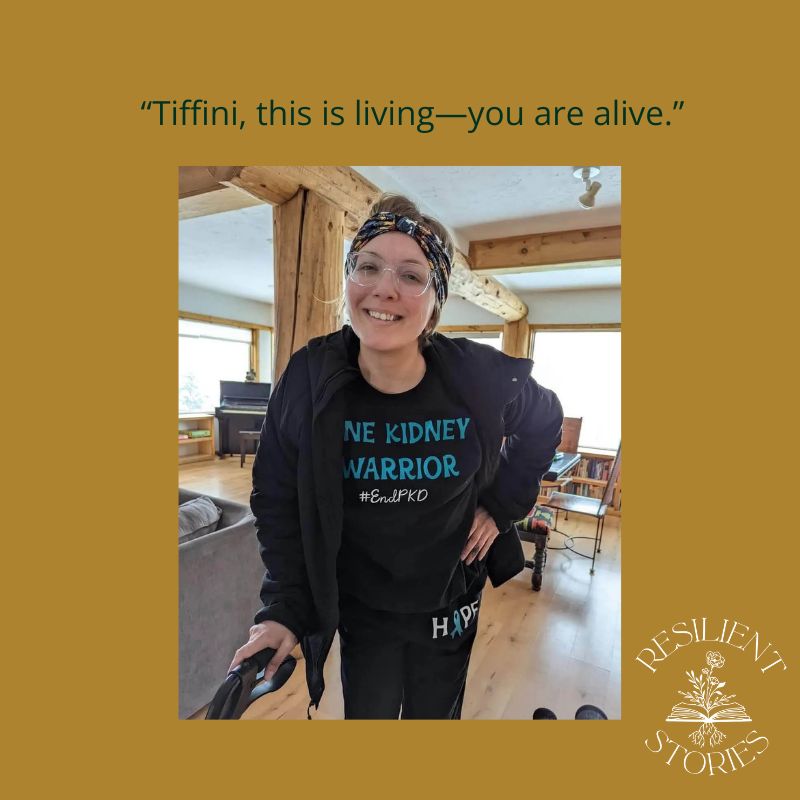
“Tiffini, this is living—you are alive.”

















0 Comments