

Navigating Your Emotional Landscape to Reclaim Triggers
Being “triggered” refers to experiencing a strong emotional reaction—often tied to past trauma or unresolved feelings—when confronted with certain emotion words, phrases, or situations.
Words hold immense power; they can lift us up or cut us down, and sometimes, they stir feelings we don’t expect or know how to process.
For most people, trigger words tied to feelings like fear, anger, or despair can feel overwhelming, even paralyzing, serving as barriers to growth and healing.
But what if we could change that?
What if you could reclaim the power of these words, using them to foster self-awareness, build resilience, and even heal?
This article gathers insights from experts to help you explore how to reframe, understand, and process triggering words.
Along the way, we will uncover strategies for transforming your emotional responses into tools for personal growth and empowerment.
Let’s start with a list of common emotion words to help you name and navigate your feelings.
Common Emotion Words and Phrases
Here’s a list of common emotion words to help identify the feelings tied to triggering moments:
Positive Emotions:

- Joy: “This fills me with happiness.”
- Love: “You mean the world to me.”
- Hope: “I believe things can get better.”
- Enthusiasm: “I’m so excited to dive into this!”
- Pride: “I’m proud of what I’ve accomplished.”
Negative Emotions:

- Angry: “That makes my blood boil.”
- Fear: “I feel like I’m in danger.”
- Sadness: “I can’t stop the tears from falling.”
- Despair: “Nothing seems to matter anymore.”
- Guilt: “I can’t believe I did that.”
Complex Emotions:

- Surprise: “I didn’t see that coming!”
- Embarrassment: “I wish the ground would swallow me up.”
- Nostalgia: “This reminds me of the good old days.”
- Confusion: “I don’t know what to think about this.”
- Determination: “I won’t give up, no matter what.”Naming your emotions can be a powerful first step in understanding your reactions to triggering words. When we identify what we’re feeling, we’re better equipped to process those emotions and move forward.
Pieces of Advice for People Who Find Certain Words Triggering
Discover strategies to transform your reaction to trigger words, informed by expert analysis on emotional resilience.
The following experts offer a roadmap to understanding and redefining personal triggers, providing tools for healing and empowerment.
Consider Who the Words Are From
One piece of advice I would give someone who finds words tied to emotions like fear or anger, particularly triggering, is to consider where those words are coming from.
Reflecting on how open communication might allow you to express what hurts and foster mutual understanding can be helpful.
As a mental health therapist, I often work with individuals experiencing distress.
Over time, I’ve learned the value of describing what I observe without attaching my emotions or biases.
A simple and powerful tool anyone can use is the phrase, “I can see.” When we say, “I can see…” and then describe the behavior or situation, we shift the focus back to observation rather than emotional reaction.

This allows us to recognize and acknowledge the experience without internalizing or personalizing the words.
For example, instead of reacting to anger, you might say, “I can see that you’re having a hard time,” which opens the door for empathy without assuming blame.
This small shift helps us understand that the way others speak to us often reflects more about their internal state than our worth.
Reclaiming the narrative through calm observation fosters personal growth, resilience, and deeper self-awareness.
Charlotte Diaz, Junior Psychotherapist and Mental Health Consultant, Tykes and Teens
Challenge Unhelpful Beliefs Related to Emotional Trigger Words
Language has the power to shift our perspective on the stories we tell ourselves. I would ask anyone who feels triggered by emotion words, like “anger” or “fear,” “What is the story you are telling yourself around these words?”
If the words themselves are triggering, you may have grown up in an emotionally invalidating environment where emotions were dismissed and repressed.
Just the words themselves become a trigger for your body and mind to travel back to where you felt disconnected and rejected by those around you.

By reclaiming emotional words and identifying our narratives around emotions, we can challenge unhelpful beliefs with more balanced ones. We can give ourselves the space to change the narrative around emotions to feel more balanced and positive, rather than dismissive and heavy.
Christina Canuto, Licensed Marriage and Family Therapist, Certified Intuitive Eating Counselor, Lotus Counseling Group
Heal Emotional Wounds and Discover Pain Points
To reclaim our power of emotional words for growth is to reclaim our connection with our authentic selves. Being triggered is a sign of an emotional wound that you can heal.
Instead of avoiding the feeling, go into it with childlike curiosity to understand where the pain is coming from. Another big hint is to know that everything happens in a moment.
For example, many clients will tell me they are triggered because of what happened in their childhood; however, the brain does not wait around for 10 years to create its defense.
All wounds happen in a single moment because that is all there is. Find the moment, feel the emotions attached to it, and let it go.

Understanding and acceptance are two amazing tools that allow us to “let go” of emotional pain. Triggers are good because they show us what is left in us to be healed/mended.
Triggers are like the metal detector going off in the sand, showing us where to dig. The treasure we discover is the wisdom that comes from processing emotional energy.
As Dr. Joe Dispenza says, “Wisdom is a memory void of emotional charge.” Triggers are “bad” when we leave the wound unattended. It’s like having a dislocated shoulder and lacking the courage to go through a moment of intense discomfort to set it back in place.
Courage is what it takes to process our emotional wounds; it takes courage to feel the rest of what’s there and get the growth from completely feeling. This is the essence of fully processing our feelings and emotions.

Healing and/or removing triggers is the essence of freeing ourselves from a physiological cage, allowing us to explore new experiences once more and reconnect with our authenticity.
Nicholas Clay, Conscious Coach, Being ONE World
Reframe Emotion Words That Leave You Feeling Triggered
If certain emotion words like fear or anger feel triggering, try getting curious about the reaction rather than resisting it.
People’s emotions are data signals from the nervous system. They are designed to guide, not control us. In my work, I help leaders and teams understand that emotions don’t just happen to us; they happen for us.
An effective way to reclaim the power of reaction words is through language reframing and nervous system regulation.
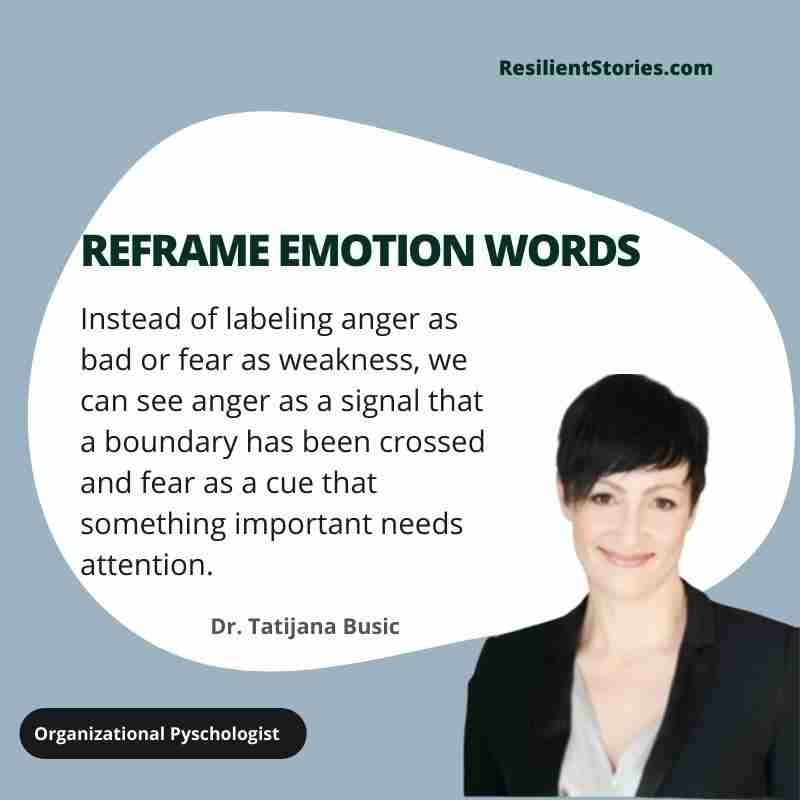
Instead of labeling anger as bad or fear as weakness, we can see anger as a signal that a boundary has been crossed and fear as a cue that something important needs attention.
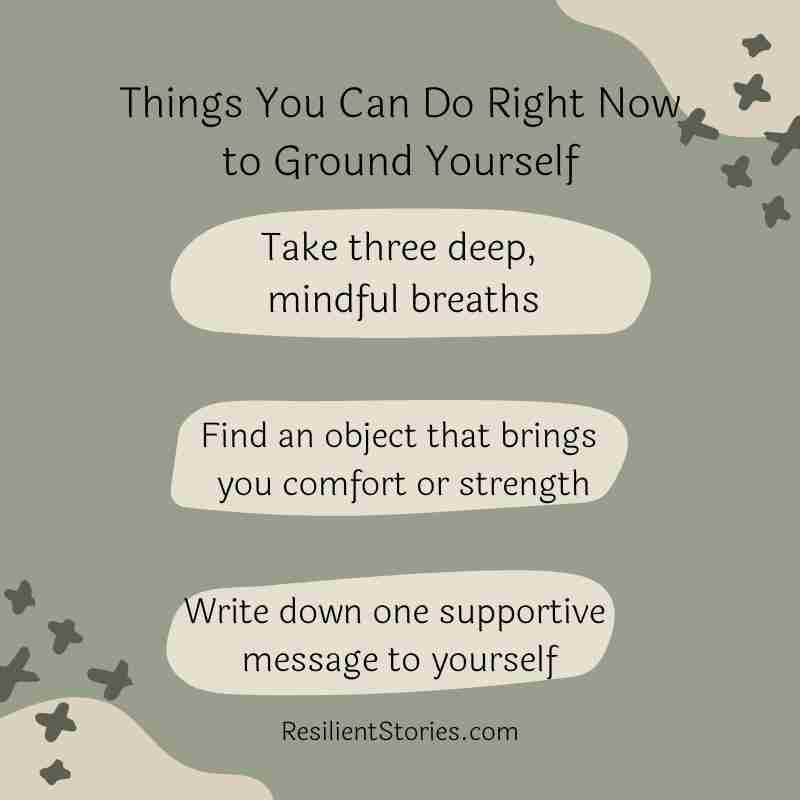
Pairing this with somatic tools like breathwork or grounding exercises helps the body process these emotions so they don’t feel overwhelming. Instead, we learn to respond adaptively rather than react on autopilot.
The real shift happens when we stop seeing emotions as something to avoid and start using them as fuel for self-awareness, resilience, and better decision-making.
When we do that, emotions stop being the enemy and start becoming our greatest asset. Learn to work with all emotions the way they’re meant to be worked with.
Dr. Tatijana Busic, Organizational Psychologist, Busic Psychology & Consulting
Using Writing and Journaling to Understand Triggers
Noticing your reactions to words is a great first step to learning about your triggers. However, noticing things only goes so far. Something you can do to further your self-learning is journaling.

Journaling doesn’t have to be a rigid activity. You can choose the length of what you write, whether it’s pages, paragraphs, or even sentences long.
When you’re first starting with this activity, you may find yourself writing more and that’s okay.
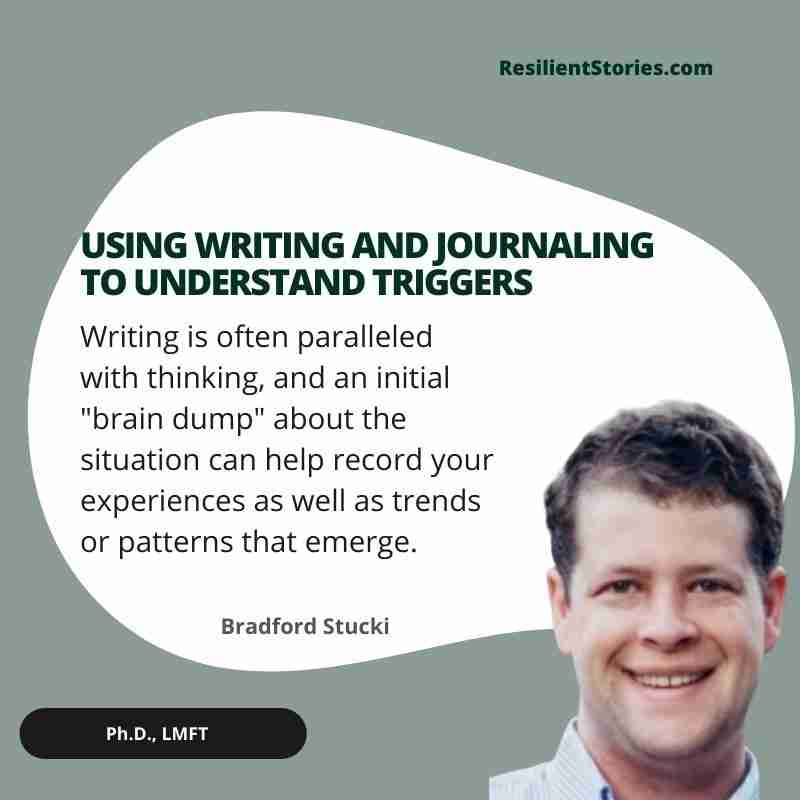
Writing is often paralleled with thinking, and an initial “brain dump” about the situation can help record your experiences as well as trends or patterns that emerge.
Reducing journal entries to several sentences creates an invitation to sift through what is most important to write down.
Reclaiming the influence of emotion words can occur by degrees.
That is, maybe there’s a different way to express the triggering word or a synonym that you can use instead. This is commonly known as “reframing” in therapy. As you pair journaling with reframes, you may gradually reclaim what was once a reaction and now have a response.
Bradford Stucki, Ph.D., LMFT, Owner and Licensed Marriage and Family Therapist, BridgeHope Family Therapy
Create New Meanings for Words and Phrases
When a word is particularly triggering, stating out loud, “These are only words, and words can have many meanings. What am I going to allow it to mean to me?”
You create these meanings of words based on experiences. Our mind attaches to these experiences and provides meaning to them.
When you ask what you are going to allow it to mean, you take the power of those words and create new meanings for them.
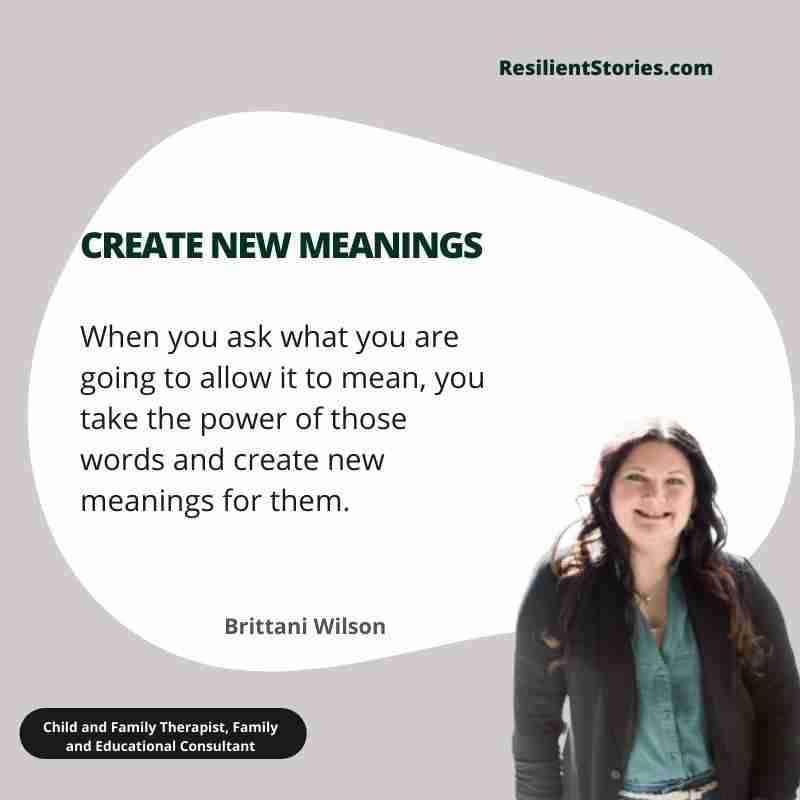
These new meanings can then help you create powerful memories that can eventually override your automatic negative thoughts. With this newfound power, you have just created within you resilience and the opportunity for personal growth.
Brittani Wilson, Child and Family Therapist, Family and Educational Consultant, Resilient Roots Counseling Services
View Emotions as Information
Emotions can bring up a certain amount of intensity, effusiveness, and energy.
However, when feeling certain emotions or even speaking the words contributes to traumatic feelings, it’s helpful to reframe some of your thoughts about emotions.
One effective way to think about emotions is to think of them as simply “information.” A fruitful analogy to draw upon would be an engineer who is designing a bridge.
The mathematical formulas that they utilize when designing the bridge simply provide the needed “information” without a specific attachment related to the outcome.
When we can similarly view strong emotions, it allows us to maintain more neutrality, better meet our own needs, and practice being less emotionally judgmental.

Additionally, receiving this emotional “information” allows us to “build bridges” in relationships, advocate for our emotional needs, and change behaviors as needed.
If you know what you feel, then you know what you need. I.e., if I feel bored, I need stimulation, or if I feel lonely, I need connection.
Conversely, if you don’t know what you feel then you don’t know what you need. When we fail to receive this emotional information, we contribute to greater “neediness,” stagnation, and less overall resiliency.
You can practice this by looking outside at trees. You may notice that you simply become aware of what trees are in your vision. There’s no judgment or wishing that the oak tree would be a pine. Now, turn your gaze inward and look at your emotional landscape.
Louis Laves-Webb, LCSW-S, LPC-S, Psychotherapist/CEO, Louis Laves-Webb, LCSW-S, LPC-S & Associates
Accept and Heal Traumas to Reduce the Impact of Trigger Words and Phrases
When you find yourself triggered by emotional words, you have a powerful opportunity for healing.
By learning how to accept whatever is happening within you at those moments, you can heal past trauma, learn to accept yourself, grow your resilience, and get better at letting your feelings flow through you and be released.
Any time a difficult emotional topic triggers you, the crucial thing to do is accept both the emotional word itself and whatever is coming up for you at that moment.
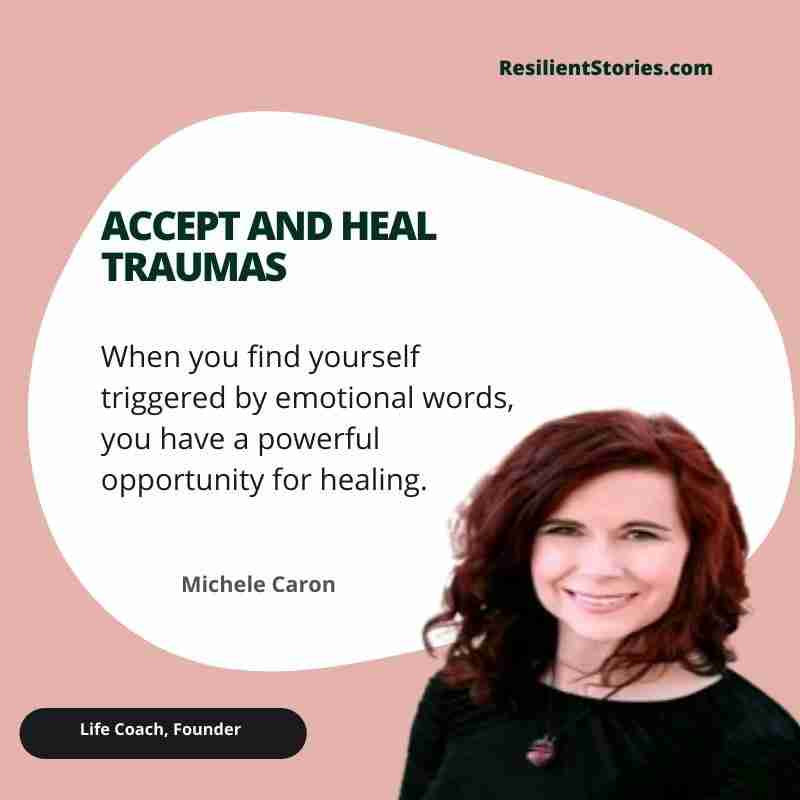
You can take yourself through a quick but powerful process like this:
- Notice you are getting upset and identify the word that is bothering you.
- Encourage yourself to accept everything that is happening, for example, “I’m getting upset by the idea of anger, I don’t like anger, and I’m feeling scared and a bit angry myself. But that is okay. Of course, I might feel like that. But, you know what? Anger isn’t always bad, and it’s a genuine feeling that people deal with, even me.”
- Take a deep breath, focus inward, and for anything else that comes up, let yourself know it is okay, and you are okay.
With even just one or two occasions consciously performing this process, you will find these healing steps become automatic. You are much less triggered, and much more comfortable in conversations and situations!
Michele Caron, Life Coach, Founder, MyLifeCoach.com
Find Beliefs Behind Trigger Words
When we are triggered by certain words tied to emotions like fear or anger, we need to find out what they mean to us and what beliefs we have attached to them. It’s not the words themselves that trigger us, it is a connection we have created with an experience or feeling.
Applying a pause to give yourself some time after you feel triggered is an excellent way to start this process. The closer you can stay to the moment when these emotions flare up, the better. Make sure you don’t act out of this state, but examine where it is coming from.
Recognizing that these words trigger you is the first step. By understanding this, you can take the first sting out of them.

Because you can change your mindset to an examination mode, instead of a response mode. It could be that it is a specific person who said these words, or that it happens in a particular situation. However, the process of elimination has now started and this is something you should embrace.
Once you continue with this exploration, you will come closer to the underlying belief that is connected with these trigger words. Understanding the origin of your emotional reactions to these words will help you come up with methods to reduce their impact.
When you work with this for a while, you’ll be able to take away their trigger completely. You’ll see that it is your beliefs that have added this reaction to these words.

From here on out you can return them to what they were to begin with, words spoken or written by others. And remember that this is a process, not something to be fixed in a day.
Benny Voncken, Stoic Life Coach, Motivational Speaker, Podcast Host, Via Stoica
Turning Emotional Triggers and Reaction Words Into Tools for Growth
Triggering words don’t have to control us. By understanding the beliefs and experiences tied to these words, we can take their power back.
The expert advice shared here gives us a range of tools to do just that—whether it’s journaling to explore our reactions, reframing negative emotion words into messages of growth, or creating new, empowering meanings.
Ultimately, the words we use—and the stories we tell about them—shape how we see ourselves and the world.
That is the reason that marketers and writers invest so much time in choosing a good headline, learning about their target audience, and finding ways to connect with their readers. How did you feel reading these words in this article?
By consciously working with our emotional triggers, we can shift from simply reacting to truly responding with strength, self-awareness, and resilience.
So the next time a word stirs up different emotions like being scared, angry, or sad, just pause.
Name the emotional trigger, get curious, and remind yourself: words may hold power, but you hold the pen.
Are there trigger words you struggle with? Let us know in the comments below.



























0 Comments