
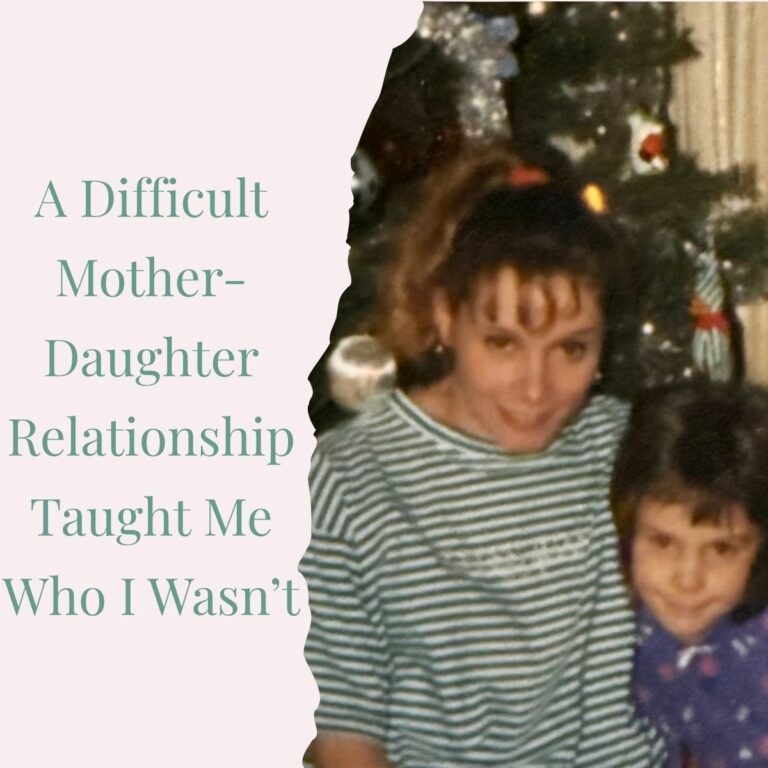
A difficult mother-daughter relationship can shape the way you understand yourself long before you are old enough to realize that someone else’s version of you might not be true. For me, that started when I was five years old and went to live with a woman I barely knew.
That woman was my mother.
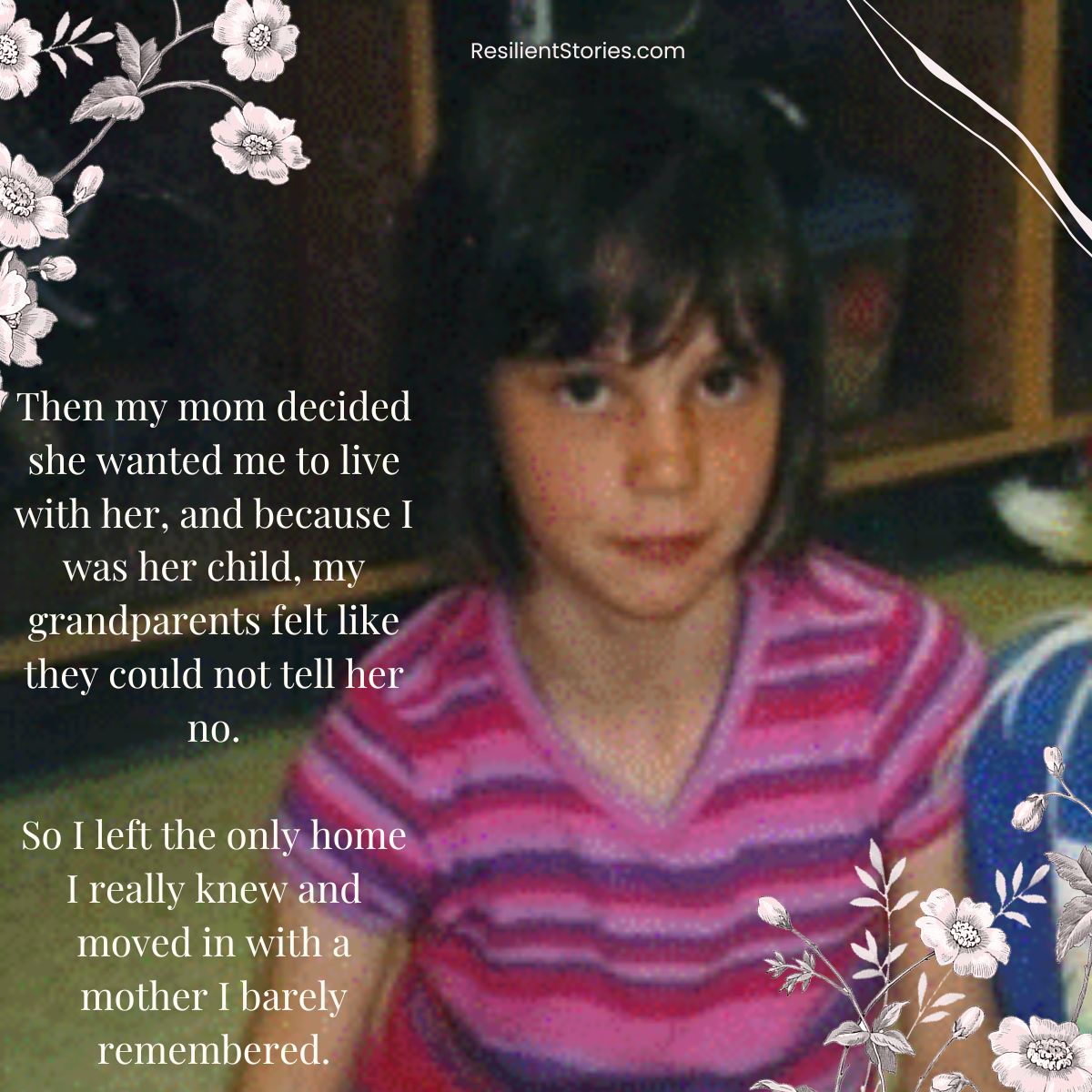
For the first several years of my life, I had lived with my grandparents, and as far as I remember, I was happy there. They were steady and familiar, and their house felt like home. Then my mom decided she wanted me to live with her, and because I was her child, my grandparents felt like they could not tell her no.
So I left the only home I really knew and moved in with a mother I barely remembered.
I remember feeling sad and uncomfortable around her almost immediately. We did not have much of a relationship, and suddenly I was living with her in a run-down house where I could hear mice moving through the walls.
She was involved with a man who was in prison, and I was expected to call him Dad even though I did not know him. My mom worked nights for a while, so I would stay overnight at a strange daycare-like place where other kids slept too, and I barely saw my grandparents during that period.
When I look back now, there is not one single moment I can point to and say, “That was when everything changed.” It was more like a constant feeling that I was somewhere I did not belong, with someone who was supposed to feel familiar but did not.
That was the beginning of a difficult mother-daughter relationship I would spend years trying to understand.
My difficult mother-daughter relationship began with instability
My mom had me when she was 15, and she was partying and drinking heavily at the time. My biological dad left when I was still a baby, so there was a lot of instability before I was even old enough to understand what instability was.
Eventually, my mom met the man who became my stepdad. They got married quickly, and again, my life changed almost overnight.
My stepdad himself was not a part of that period I remember being afraid of. In fact, I have a much different relationship with him now.
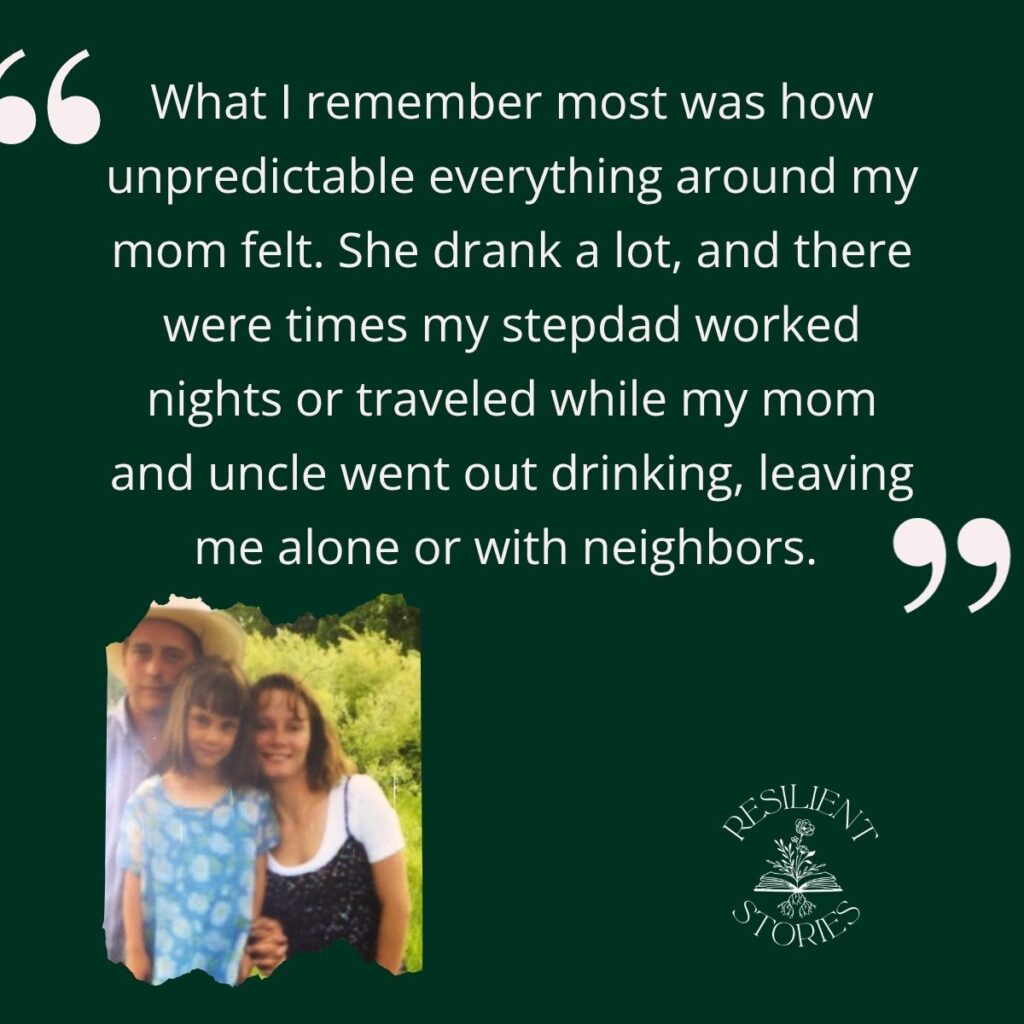
What I remember most was how unpredictable everything around my mom felt. She drank a lot, and there were times my stepdad worked nights or traveled while my mom and uncle went out drinking, leaving me alone or with neighbors.
She usually couldn’t get up in the morning, and I would wake and get ready for school all by myself. Sometimes, I could catch the bus, and other times I walked all the way there.
Of course, for appearances’ sake, there were just enough times when she would roll out of bed and drive the neighbor kids and me.
Getting myself to school was only part of it. My mom rarely did laundry or cooked, so I rarely had clean clothes or what I needed to feel prepared. I remember one winter when I hid in the bathroom during recess because it was freezing outside.
I got into a lot of trouble, and the school brought my mom in and lectured me about breaking the rules and not coming prepared for school. What I could not bring myself to explain was that I did not want to wear my coat because it smelled like cat urine.
Once again, the adults around me saw a child refusing to follow the rules. They did not see the child trying to manage a situation she did not know how to explain without exposing what home was really like.
One memory has stayed with me for years.
We were living in Belgrade for a while before moving again, and I really liked my school there. I had friends, and my teacher knew I would be leaving in the middle of the year, so she planned something special for my last day so I could say goodbye.
I was really excited.
My mom told me not to take the bus that morning because she would drive me to school. Then she would not get out of bed, and I missed my last day completely.
I never got to say goodbye to my friends or go to whatever my teacher had planned.
There were much bigger things that happened during my childhood, but that one still gets to me. I think it is because childhood is full of small promises that do not feel small when you are a kid who depends on them.
Somebody says they will take you somewhere, show up for you, or be there when they said they would, and little by little, you learn whether or not you can count on that person.
I was learning very early that I could not always count on my mother.
A difficult mother-daughter relationship changed the way I saw myself
When my mom became pregnant with my younger sister, she stopped drinking for a while. I remember that period less for the drinking and more for how angry she seemed to become toward me.
She was mean in ways that were difficult to understand as a child. She made fun of me, criticized how I looked by calling me ugly or fat. I was a very skinny kid. She made comments about my intelligence and what I would or would not be capable of doing someday.
Because she was my mom, some of those things went straight in.
That is one of the hardest parts to explain about being a kid. The person saying something does not have to be accurate for their words to become important. When the person telling you who you are is your mother, you do not automatically think, “Maybe she is projecting her own pain onto me.”
You think maybe she knows something about you that you do not.
My mom was also the person I had, which made it even more confusing. There was no other parent consistently standing next to me, saying, “No, that is not who you are. That is not true.”
I remember feeling like she blamed me for the direction her life had taken. She had become a mother at 15. She had not gone to college. There were things she wanted and did not get to do, and as a child, I absorbed the feeling that somehow I had complicated her life simply by existing.
Then my younger sister was born, and I watched my mom treat her completely differently.
My mom loved her in ways I did not remember being loved. At the same time, she would tell my sister that I was evil or that she was not safe around me. My sister was a toddler, so of course, she believed her. For years, we did not really have a relationship because she had been taught to be afraid of me.
That was one of the most confusing parts of growing up. I could see that my mom was capable of being warm, loving, and maternal because I watched her be that way with someone else.
She just did not seem capable of being that way with me.
When you are a child, you do not necessarily conclude that the adult is struggling or that the relationship is unhealthy. You conclude that there must be something about you that explains the difference.
I spent many years trying to get away from that feeling.
I learned to find safety somewhere else
School became one of my safe places, so I did well there and got involved in sports because sports meant I could stay after school. Once I was old enough to work, I worked. I also dated, often guys who were much older than I was, because relationships gave me somewhere else to be and someone else to belong to.
Some of those choices look very different to me as an adult than they did at the time, but back then, I was mostly trying to spend as little time at home as possible.
There was something comforting about places where the rules made sense. School had schedules. There were expectations. You did an assignment, and somebody gave you a grade. People told you what was supposed to happen next.
Home was much harder to predict.
Sometimes, when my mom was especially angry with me, she would shut off my cell phone service and lock me out of the house for the night. She would basically tell me to figure out where I was going to stay.
There were nights when I waited until she went to sleep, took the screen off my bedroom window, climbed into my own room, and slept in my own bed. Then I would set an alarm so I could wake up early enough to sneak back out before she realized I had been inside.
I remember how much panic I felt around that. I was scared of what would happen if I got caught sneaking into the house where I lived because I needed somewhere to sleep.
At one point, my parents noticed something was wrong with the window screen and decided I must be sneaking out. A police officer who was friends with my family came to my school and pulled me into the library to scare me about how much trouble I could get into for sneaking out at night.
I could have told him what was actually happening. I did not.
The truth sounded ridiculous, and by then I had already learned that adults did not always believe the version of events that came from me. So I sat there and cried while he assumed I was crying because I felt guilty.
I let him think that.
Looking back, I think that moment taught me something bigger than I understood at the time. I was starting to learn that even when I knew what had happened, someone else’s version of the story could still become the version everybody accepted.
Everyone else knew a different mother
My mom had a really good reputation in our town. She worked, she was an EMT, and people saw her as kind, helpful, and involved in the community.
That was not the version of my mother I knew at home.
I think that difference made everything harder because there was always another reality floating around. Other people knew the woman who helped people. I knew the person who criticized me, locked me out, and made me feel like I was constantly doing something wrong.
When I left for college in Idaho, I hoped distance might help. I had intentionally chosen a school farther away because I wanted space from her, but physical distance did not end the relationship.
She still texted me. She still criticized me. She told me I was not smart enough and would never make it through college. At one point, I remember asking family members whether there was any way to block her number, but because we were on the same phone plan, I could not.
One year around my birthday, she asked for my address because she wanted to send me something.
She mailed me an old dental bill from when I was a child because she wanted me to pay the remaining balance.
That was what came in the mail for my birthday.
Eventually, I mostly stopped responding to her, and when I did, the conflict got bigger. My mom started telling people we both knew from our hometown that I was spreading rumors about her in Idaho, including that she was drinking again.
People from home started messaging me on Facebook, asking why I would say things like that about my mother.
I remember being completely confused because nobody at my college knew her. There was no reason for me to be running around Idaho talking about my mom, and I could not understand why anyone thought that made sense.
But once again, somebody else had created a version of other people, and we were responding to that version without ever asking what was actually happening.
For much of my childhood and adolescence, my mom gave me a version of myself that I eventually had to learn was not necessarily true. In her version, I was difficult, not smart enough, somehow dangerous to my sister, ungrateful, and frequently responsible for whatever problem was happening around us.
When you hear those things often enough from your mother, it becomes very easy to stop asking whether they are accurate and start wondering what you need to change about yourself.
Distance from our difficult mother-daughter relationship gave me room to discover who I was
The older I got, the more I built my life around getting farther away.
During summers in college, I did not want to go home, so I took a job selling pest control door-to-door in other states. One summer, I ended up in St. Louis with a sales team made up mostly of members of the Church of Jesus Christ of Latter-day Saints.
What struck me first was not the religion. It was the people.
They seemed nice and normal with one another in a way my family had never felt normal to me. I remember thinking that these people were nothing like the family environment I had grown up in, and there was something really appealing about that.
So I came back to school and joined the church.
At that point in my life, it was really good for me. I had community and friends, and there were people around me who seemed to genuinely care what happened to me.
Eventually, I served an 18-month mission in Mexico City, and I loved it. I spent my days outside talking to people; I was somewhere completely different, and I did not have to deal with all of the family dynamics I had spent years trying to escape.
At the time, missionaries could only communicate with their families in very limited ways, mostly through email once a week. A lot of missionaries struggled with that.
I thought it was fantastic.
For once, distance was built into the rules.
As I told this story, I started noticing something about myself that I had never really put together in quite the same way before. I kept finding home somewhere else. I found pieces of it at school, in sports, at work, in college, in church, and eventually halfway across the world in Mexico City.
Any place that felt predictable, kind, or welcoming became incredibly important to me.
I think that makes sense now.
When the first place that is supposed to teach you belonging does not feel safe, you start looking for belonging wherever you can find it.
My difficult mother-daughter relationship ended before it could ever be repaired
When I was 20, my mom died by suicide.
By then, we were barely speaking. I later learned that she had started drinking heavily again and was struggling with several parts of her life. There had been concerns about her safety before she died, but I was away at college and did not know everything that had been happening.
Her death brought a mix of emotions that did not fit neatly into what people usually call grief. Honestly, part of me felt relieved because I believed my life might finally become easier. I also felt angry about the pain she had caused and deeply sad for the members of my family who were devastated by her death.
The public response made those feelings even more complicated.
My mom had been a visible part of the community, and her memorial service was held in my high school gym. One side of the gym was completely packed with people from town and first responders from the surrounding area. There may have been close to a thousand people there, although I cannot say for certain.
Her obituary described her as a deeply caring, nurturing, and dependable person who had touched countless lives. It also spoke about how proud she was to be a mother and described her as someone who had stayed home with her children for years.
Reading that was difficult because it described the version of my mom that everyone else knew. It was the woman who helped people in the community, worked as an EMT, and showed up as caring and reliable.
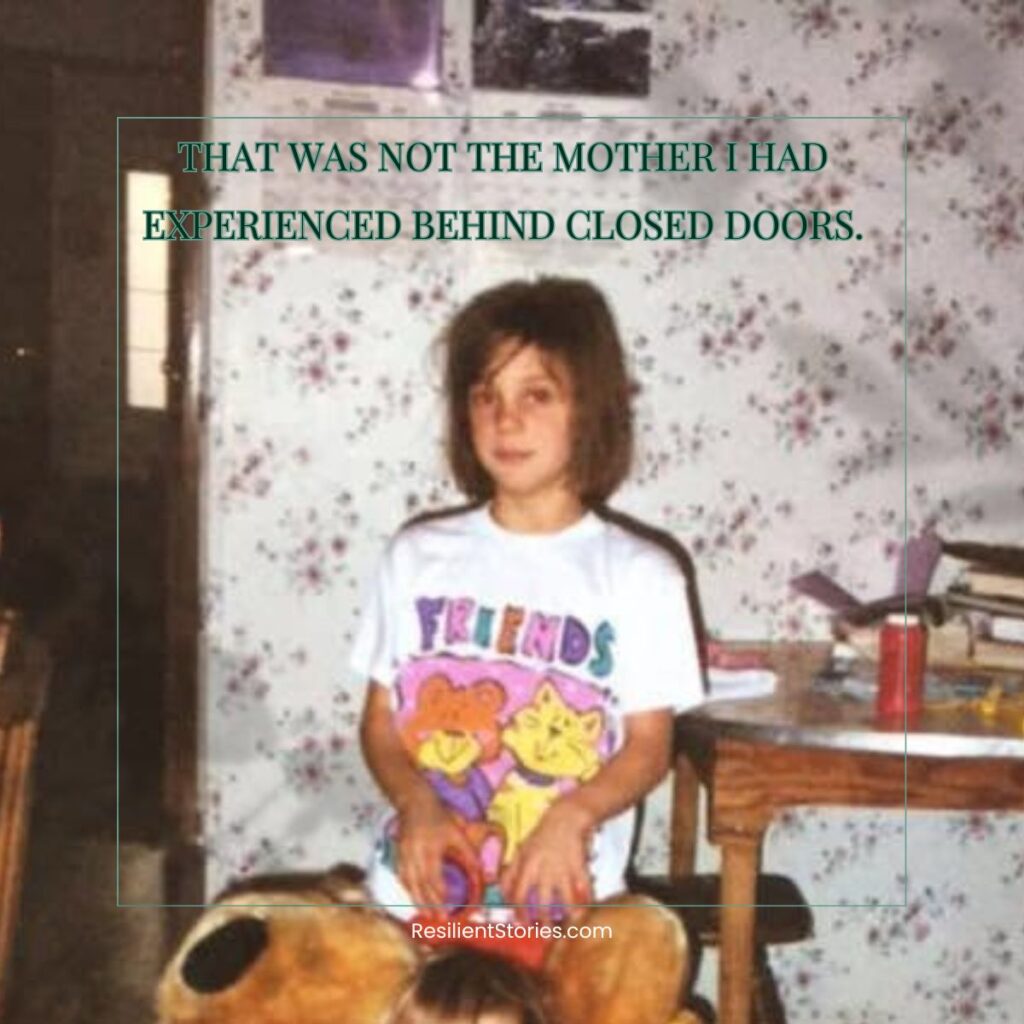
That was not the mother I had experienced behind closed doors.
My mom also left letters for several people before she died. There were messages about family members, relationships, and different things that had been happening in her life. Then there was the part about me.
She referred to me as her “Mormon convert daughter,” said I was a whole different story, and moved on.
Our difficult mother-daughter relationship ended without a final conversation. There was no apology, and no moment when she suddenly understood why I had pulled away. I never got to sit across from her as an adult and ask why she treated me the way she did, and she never got to explain how she understood our relationship.
Death froze everything exactly where it was.
I would say if I grieved anything, it was losing the possibility that someday the relationship might become something different. Or maybe even grieving the mother I never had.
Healing a difficult mother-daughter relationship without reconciliation
I do not know that there is one correct way to heal a relationship when the other person is no longer here.
There was no possibility of repairing my relationship with my mom in the traditional sense. I could not call her, confront her, ask her questions, or watch her change. I could not hear an apology or find out whether she would ever see things differently.
Eventually, the work had to become less about changing the relationship with her and more about changing the relationship I had with the things she taught me about myself.
My mom told me I was not smart enough, and I went to college.
She made me feel like there was something fundamentally wrong with me, and I eventually built a career where I sit with other people and help them make sense of their own lives.
She told other people versions of me that were not true, and I had to learn that someone saying something loudly, repeatedly, or convincingly does not make it reality.
I also had to figure out how to hold something more complicated than simply deciding my mother was a terrible person.
She was 15 when she had me. She also battled alcoholism and addictive behaviors. I realize my mother had her own pain, her own history, and her own things she never worked through.
Understanding some of that gives me context for her behavior, but context is not the same thing as erasing its impact.
For years, therapists told me that my mom had probably been doing the best she could with what she had, and I worked hard to accept that explanation.
I understood that her behavior had come from somewhere, and I thought healing meant learning to excuse what happened because she had been struggling too.
Then I repeated that familiar explanation to a new therapist, and she responded with something like, “Couldn’t she have picked up a parenting book?”
It was such a simple response, but it was one of the most helpful and healing things anyone had ever said to me. For once, somebody was not immediately asking me to make my mother’s behavior understandable. She was pointing out that being young and struggling did not remove every opportunity my mom had to seek help, learn something different, or make different choices.
That conversation helped me understand that compassion and accountability do not have to cancel each other out. I can recognize that my mom was hurting without treating every harmful choice as unavoidable. I can understand that she was incredibly young when she became a parent and still acknowledge that I was a child who deserved safety, clean clothes, food, protection, and care.
I do not have to turn my mother into a monster to tell the truth about what our relationship cost me, but I also do not have to keep excusing what happened to prove that I understand her.
I had to separate who I was from who my mother said I was
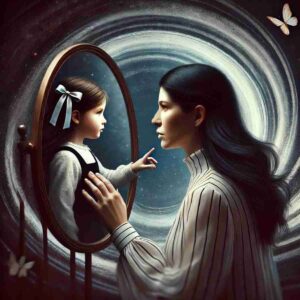
For much of my childhood, my mother functioned like a mirror, but what she reflected to me was distorted.
I learned to see myself as difficult, unintelligent, ungrateful, and somehow responsible for problems that were much bigger than me. I learned that maybe I could not trust my own version of events if somebody else sounded more convincing. I learned to look for safety outside of myself because the places and people I was supposed to trust did not always feel safe.
When you carry those lessons long enough, they begin to sound like your own voice.
I think one of the biggest parts of growing up has been learning to ask whether the things I believe about myself are actually mine.
Who taught me this?
Is it true?
Does it match the life I have actually lived?
Sometimes the answer is yes.
Other times, I realize I have been carrying somebody else’s pain around and calling it my personality.
I cannot change what my mom thought about me or go backward and make her treat me differently. I cannot get the conversation where she tells me she was wrong.
What I can do is decide whether her understanding of me remains the final authority on who I am.
That has taken time, and I do not think it is something you necessarily finish once and never have to think about again.
There are still patterns I can trace back to that relationship. There are still moments when I want to get away, find safety somewhere else, or question whether I am seeing a situation correctly.
The difference now is that I recognize where some of those instincts came from.
Being shaped by something is not the same thing as being defined by it.
That distinction has become really important to me.
What a difficult mother-daughter relationship taught me about belonging
The older I got, the more I built my life around getting farther away.
During summers in college, I did not want to go home, so I took a job selling pest control door-to-door in other states. One summer, I ended up in St. Louis with a sales team made up mostly of members of the Church of Jesus Christ of Latter-day Saints.
What struck me first was not the religion. It was the way they seemed kind, stable, and connected in a way my family had never felt. At that point in my life, I was drawn to anything that looked like safety and community, so I returned to school and joined the church.
The church initially gave me friends, structure, and a community during a period when I did not have a safe family system to rely on. I later served an 18-month mission in Mexico City, and the distance from my family was a relief.
I want to be careful not to romanticize that part of my life. My experience with the church eventually became deeply harmful, and religious trauma is now one of the areas I specialize in professionally.
That is a much larger story of its own. What matters in this particular story is that I was searching for somewhere to belong, and at first, the church appeared to offer the stability and acceptance I had been missing.
Looking back, I can see how easily I moved toward communities that seemed predictable, welcoming, or certain about how life was supposed to work.
When home does not feel safe, structure can feel like safety, and being welcomed can feel like proof that you have finally found where you belong.
Sometimes that community is genuinely supportive. Sometimes the cost of belonging does not become visible until later.
Writing My Own Story of Belonging
Belonging became about learning how to become a safe place for myself, too.
I keep thinking about the five-year-old version of me who left my grandparents’ house and moved in with a mother she barely knew.
She could not have understood any of this.
She just knew she was sad, uncomfortable, and missed the place where she had felt safe.
If I could sit beside that version of myself now, I think I would tell her that she was not imagining what she felt. She was not inherently difficult, and she was not responsible for the choices the adults around her made.
I would tell her that she was going to spend years looking for belonging, but she would find it in places she could not possibly imagine yet.
More than anything, I would tell her that someone else’s inability to love you well does not tell you how lovable you are.
My mom and I never got the relationship I think part of me wanted. Her death meant there was no chance for the kind of reconciliation people like to put at the end of stories, and I think I have had to grieve both the mother I had and the mother I needed but never really got.
That grief is complicated because I can understand that her own story is painful, and still acknowledge that being her daughter hurt me.
I do not have to choose only one of those truths.
For a long time, my mother had a lot of power over the way I understood myself. She told me who she believed I was, and because I was a child, I did not know I was allowed to question it.
I know that now.
Sometimes healing is not about fixing a difficult mother-daughter relationship. Sometimes there is no relationship left to fix.
For me, healing is learning to separate yourself from the version of you that existed inside someone else’s story and deciding that you are allowed to write your own.
My mother had her story about who I was.
I have mine now, and I get to decide which one I live.
Did you have a difficult mother-daughter relationship? Share your story in the comments below.





















0 Comments