
By Don Kurz
Resilience is often depicted as a linear triumph of willpower—a simple matter of pure grit, blind endurance, and pushing relentlessly through adversity. However, from my personal journey, I can tell you that this romanticized, one-dimensional narrative is completely wrong. There is a rhythm of resilience that is often overlooked.
Drawing from a life marked by elite athletic triumphs and career-ending injuries, entrepreneurial successes and downturns, and multi-million-dollar fortunes made and lost multiple times, I’ve come to understand a highly pragmatic and nuanced definition of true resilience.
It’s not merely the ability to take a punch and press stubbornly forward; rather, resilience is the dynamic synthesis of intense hard work, radical acceptance, and the cognitive agility to pivot joyfully when reality dictates that a specific path has reached its definitive end.
My First Crack: Franklin Field to Studio 54
My first profound test of structural resilience occurred on the cold and unforgiving Astroturf of Franklin Field in February 1976. As a lightning-quick midfielder for the lacrosse powerhouse Johns Hopkins University, I’d already tasted ultimate athletic victory, winning an NCAA Division 1 National Championship as a freshman in 1974.
My entire identity and sense of personal validation were wrapped up in being an elite athlete. Then, during a high-stakes preseason scrimmage against the University of Pennsylvania, a sudden direction change on the synthetic turf resulted in a traumatic popping and tearing sound: I’d completely ripped my right knee ACL and MCL ligaments.
Following months of grueling recovery, including eight weeks in a full leg cast, a premature return to practice caused my knee to tear a second time, effectively terminating my competitive athletic career.
For many young athletes, an injury of this magnitude represents an insurmountable existential crisis. Yet, my internal resilience manifested as a willingness to step into an entirely unexpected, completely unrelated arena.
Barred from intense running, I channeled my rhythmic background as a rock drummer onto the dance floor, mastering the intricate syncopations of the “Hustle” just as the disco craze surged into the cultural zeitgeist.
I soon became an instructor at Arthur Murray, hosted packed campus events as “Disco Donny,” and leveraged connections to gain access to the highly selective VIP room of Studio 54—all while concurrently earning an MBA from Columbia Business School.
This early transition established a foundational framework for my life philosophy: when disaster cracks your metaphorical eggs, true resilience means avoiding bitterness, looking directly at the silver lining, and establishing a completely new game to win.

Identifying the Rhythm of Resilience Within The Corporate Crucible
Moving into the corporate and entrepreneurial arena, I encountered the volatile realities of high-stakes capitalism, proving that resilience is a continuous operational loop rather than a static baseline.
After a highly successful decade in upper-tier management consulting at Coopers & Lybrand (now PricewaterhouseCoopers) and Cresap (now Willis Towers Watson), I transitioned to entrepreneurship with Equity Marketing (EMAK). Alongside my business partner, we orchestrated a successful leveraged buyout of the firm, took the company public on the Nasdaq exchange, and watched my paper net worth soar north of $50 million.
However, the subsequent years delivered a relentless cascade of macro-level and deeply personal body blows.
The internet bubble burst in late 1999, destabilizing international financial markets. Soon after, an unprecedented tragedy struck during a massive promotional product campaign: two infants choked to death on the plastic packaging housing our Pokémon premium toys.
The legal and financial fallout was severe. Lawsuits mounted, our central corporate client distanced themself, and their primary distributor went into bankruptcy, leaving EMAK holding $25 million in unsecured receivables.
This disaster was quickly compounded by the legislative compliance burdens of the Sarbanes-Oxley Act of 2002, which drained an extra million dollars a year to pay for increased legal and accounting expenses.
Survival through such prolonged, compounding turbulence required developing a sort of emotional stoicism, focusing entirely on adjusting what I could control while accepting the structural realities of market forces. Adjusting and learning new dance moves is integral to understanding the rhythm of resilience.
Fighting the Tape: The High Cost of Pride
Yet, the most profound lesson in my treatise on resilience emerges directly from my temporary failures to apply it correctly. In 2005, following an acrimonious disagreement with a divided board of directors over a private equity group’s proposed take-private transaction, I was abruptly fired in a boardroom coup.
Rather than strategically cashing out my stock holdings, taming my ego, and transitioning smoothly to the high-level corporate opportunities readily available to me, I allowed pride to overrule my instincts. I initiated an adversarial, multi-year proxy contest and extensive litigation in the Delaware Court of Chancery.
Driven by my intense desire for personal justice, I fought long past the bell. Though I won individual legal battles, the Delaware Supreme Court ultimately overturned a critical lower-court victory. The company spiraled into bankruptcy, completely wiping out my equity and draining millions of my own resources in legal fees.
I characterize this draining period now as a failure of true resilience—due to my selective perception and inability to accept an unchangeable loss.
On Wall Street, there’s a famous idiom: “Don’t fight the tape.” I generalize this financial principle to life itself: when a major trend is moving aggressively against you, doubling down out of stubborn vanity isn’t resilience—it’s self-destructive folly.
True resilience requires the radical self-awareness to lay down the hammer, surrender the comforting myth that life must always be fair, and dispassionately cut your losses before an adverse position morphs into complete ruin.
The Madoff Shock and the Omelet Pivot
More tests of my resilience arrived shortly thereafter. In 2006, while still mired in the EMAK litigation, I placed $5 million of my remaining net worth—representing nearly my entire retirement fund and remaining liquidity—into a newly co-founded hedge fund, Artemis Capital Partners.
In 2008, the subprime mortgage crisis triggered an historic systemic collapse, but the fatal blow to my fund was the sudden exposure of the Bernie Madoff Ponzi scheme. Despite comprehensive due diligence screening, several of our underlying funds were exposed to Madoff’s fraudulent assets.
Compounded by substantial leverage, the fund collapsed, costing me a devastating $4 million personal hit and leaving me with zero active income.
Once again, standing on the brink of a financial disaster, I found a way to execute a successful pivot. In 2011, I re-entered the professional services sphere as a consultant and board chair for Omelet LLC, an innovative but financially struggling creative advertising agency.
Recognizing their creative genius but lack of fundamental operational and financial structure, I invested my remaining $200,000 to assume ownership control and became CEO. Over the next decade plus, I recruited a stellar team, and we stabilized the business and built Omelet into a highly regarded, independent agency where I remain majority shareholder and executive board chair.
The Gut Algorithm
Ultimately, my narrative reveals that long-term resilience is governed by an internal “gut algorithm” rather than rigid willpower. Drawing from this concept taught by my father, who recently passed away at 101, I argue that life must be divided into two distinct buckets: things we can control and things we can’t.
Valuable mental energy must never be wasted on the second bucket.
True resilience is an embrace of reality—a pragmatic refusal to avoid or deny the cold, unchangeable facts of existence. By combining an unyielding work ethic with the emotional intelligence to subordinate your ego, manage the fear of failure, and pivot joyfully toward new horizons, anyone can successfully transform the inevitable body blows of life into portals of profound self-discovery and emerge in a better place.
* * *
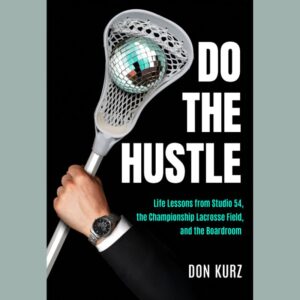
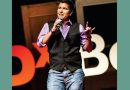
Don Kurz is an entrepreneur, former championship lacrosse player, and dance instructor who regularly danced the Hustle at Studio 54. He has been a senior partner in a major international consulting firm, successfully taken a company public on Nasdaq, started a hedge fund, and currently is the executive board chair and principal shareholder of leading creative agency Omelet LLC. His new book, Do the Hustle – Life Lessons from Studio 54, the Championship Lacrosse Field, and the Boardroom, is both an amusing and serious collection of lessons learned, taught to readers through his dynamic life story. Learn more at DonKurzAuthor.com.
























0 Comments