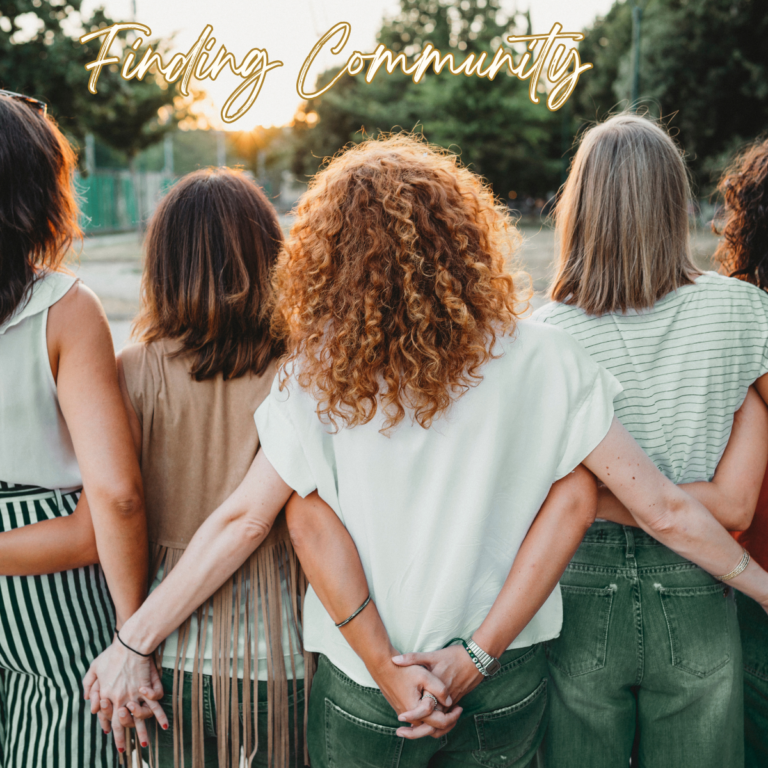
I’ve been trying to figure out, for most of my life, what “finding community” actually means. Not the word, the thing. The real version.
I had a magical childhood that resulted in an ACEs score that keeps therapists employed. People want me to clean that up, simplify it, make it make sense in a straight line. It doesn’t.
And I think that’s where this starts. When you grow up holding two opposite things at once, you end up looking for people who can do the same.
I come from people who would invent a fake sister named Madeline, insist she lived under the stairs we didn’t have, and keep the bit going for years because they thought it was funny.
When my grandmother died, we wore Groucho Marx glasses to the cemetery and threw them on top of the casket, because that would have made her laugh. That was my family. Unhinged, hilarious, and it turns out that was only half the picture.
Finding Community Amidst the Chaos
My parents were addicts. My dad was an alcoholic bartender, which meant drinking was both his job and his whole life. There was chaos and fighting. My childhood “little people” were small brown bottles with black lids (I’d learn in my twenties that they were for storing cocaine).
We were poor in the way that hippies in 1979 Helena, MT, were poor. I was born at home, illegally, with a midwife, the way hippie kids sometimes were. My mom treated injuries with comfrey and arnica and absolute confidence. My dad made wooden signs for small businesses.
Unconventional is putting it mildly.
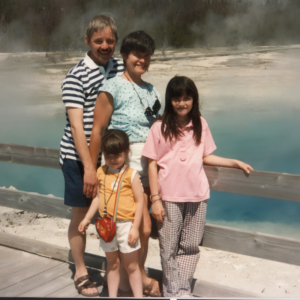
And I was loved like crazy. My mom taught me to read by the time I was three. I was never neglected. It’s the opposite, really. I was adored.
First by my parents, then by this giant orbit of aunts, uncles, cousins, family friends, and random adults who were around so often they might as well have been relatives. My mom made slip ‘n slides in the yard and turned the sandbox into a swimming pool with Visqueen.
I thought she was the strongest woman on earth because she could split wood. I had all this freedom and all this magic inside a life that, on paper, should have been a disaster.
And the thing is, I thought everyone grew up like that.
Two Things Can Exist at the Same Time
Most people always want my story to be one thing or the other, and it just…isn’t. I think that’s the thing that shaped me most. Not the chaos, or the magic, but having to hold both truths at once from the very beginning.
Maybe that’s why finding community matters to me as much as it does. Maybe when you grow up in that kind of beautiful chaos, you get good at sensing early whether you belong somewhere.
Or maybe you spend half your life trying to recreate the feeling of being held by something bigger than yourself, even if the thing holding you is messy as hell.
I first felt that in elementary school, before I had language for it. I went to school in a small town. The kind of place where you invited your whole grade to your birthday party because there were no cliques.
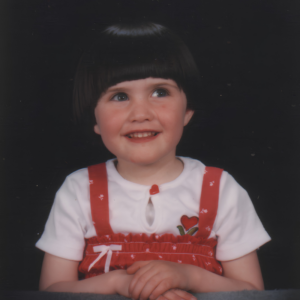
We were just all friends. Our whole class got in the local paper for starting a petition to stop logging in the state forest behind one of my classmates’ homes.
It felt normal then. Looking back, that was community.
Finding Community as a Child and Teenager
Then middle school happened, which is just social violence with lockers.
In middle school, everybody gets sorted, and not by choice. Some invisible hand just starts assigning labels none of us asked for. Popular. Weird. Smart. Stoner. Theater kid.
I was fumbling while trying to be authentic and falling short. Emulating the people I admired and still landing somewhere outside. This was disorienting after coming from an elementary school where everyone belonged by default.
I ate lunch alone a lot during my freshman year. Not in some dramatic movie way. I just didn’t know what else to do, so I filled the space with everything I could find.
By junior year, I had joined thirteen extracurricular activities. Partly because being involved meant being surrounded by people, partly because I was still looking for somewhere I belonged, and partly because it got me out of class.
It was the overachiever’s version of skipping school.
And then, of all places, I found one of my first real communities in an evangelical youth group.
How Rebellion and Religion Helped Me Discover Community
Which, given that I was raised by hippies, is objectively hilarious. Not just any church, but a charismatic, evangelical church. Hands in the air. Speaking in tongues. Worship bands. Lights. Big youth group.
I didn’t go for religion. I went because there were hundreds of kids my age, cute boys, and somewhere to be on a Friday night. It wasn’t until much later that I realized this had probably been my version of rebelling. I surrounded myself with sober churchgoers while my peers were drinking in wooded forests and empty houses.
But at the time, I wasn’t rebelling against anything. I was just looking for community. That was always the thing under the thing. I wanted people. I wanted to belong. Most importantly, I wanted someone to know my name.
And one day, a girl named Lora did. I had gone to youth group once and then disappeared for six months. When I came back, she looked at me and said, “Hi, Clementine.”
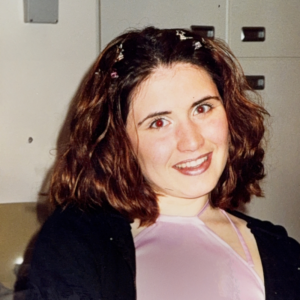
And I remember physically reacting to it, “Wait, you know who I am?” like every other teenager walking around, assuming nobody remembered me, secretly hoping someone would. And that day, it was Lora.
When Your Sense of Community is Shattered and Rebuilt
Lora and I were never best friends. Our friendship ebbed and flowed depending on which boys we were into, which girls we were closer to, which version of our extroverted selves we were that month.
We were like two kinds of oil that looked like they should mix and sometimes just separated, unexpectedly. But she was always there. At youth group, at the edges of my life, in that orbit of people I belonged to even when I didn’t quite know how.
Then, when I was nineteen, Lora died in a car accident.
Everything I thought I knew about my next move came apart.
At the time, I was going to college in Seattle and planning to transfer to a Bible college outside of Chattanooga, Tennessee, because I missed my hometown friends. I thought I needed people who made sense to me.
When she died, grief split everything open, and I stopped knowing what I needed at all. I remember the funeral. But what I remember most are all the small things leading up to getting home.
Two carfuls of friends were supposed to drive down from Seattle to Helena that weekend. We’d had the plan for a month. When Lora died, the funeral landed on the same days, and I had to call and cancel.
There wasn’t going to be a hosted weekend; there was going to be a funeral, and I needed to be at it. I was still poor. Not metaphorically. There was no extra money for a plane ticket home, and I didn’t know how I was going to get there.
My friends in Seattle didn’t get annoyed or disappointed, or make it about the ruined weekend. They showed up at my room and packed my bag. Then they called the airline. They figured out how to get me home when I couldn’t afford the ticket. My friend Lindsey said, “Put it on my credit card. We’ll figure it out later.”
Finding Community in the Kind of Friends That Stay
That was it. That was the moment.
That was when I realized community is not the people who make you feel included when things are easy. Community is the people who show up when life gets really fucking shitty. Community is the people who step in before you even know what to ask for. These people will carry you home.
I never transferred to Tennessee. I stayed in Seattle because once people have loved you like that, once they have shown you who they are like that, it changes the math.
The friends who packed my bag at nineteen are still my friends now, more than twenty-five years later. We are all in our mid-forties. They are still the people I would call.
I used to say community was the family you choose. I don’t think that’s right anymore, or at least it isn’t the whole picture. Community is all the places where you belong. Family of origin counts; mine counts enormously.
My family didn’t damage me, exactly; they made choices that had a grave impact on me, choices that were traumatic and hard and that shaped a great deal of what I have had to work through as an adult. They also made me. Both things are true.
And then there is the chosen part. My closest friends, whether in Ireland, the United States, or anywhere else, are the ones who would drop what they were doing to support my own family.
That is how I know they are really mine. They love the people I come from, even when the people I come from are complicated.
I have a few close circles of women now: the ones I vent to, cry to, and scream with in excitement and in pain. We do not always agree, and that is the point. We notice when one of us is weary, and we shoulder up for each other in the way I always wished for as a teenager and did not yet have words for. They tell me the truth. They do not mirror me. They do not flatter me. They stay.
What a True Community Does and Looks Like
That’s the thing about real community. It isn’t there to just gas you up. It’s there to call bullshit when you need it.
To say, “No, you are not seeing yourself clearly,” or “Yes, you are absolutely out of your mind right now. Sit down.” Or, maybe most importantly, it is the people who tell you that you can do this thing you’re scared of, and if you fall on your face, they’ll be right there.
If I had to name what makes a community real, I would say it has to be authentic, kind, and adventurous. Authentic because what is genuine cannot be faked into existence. Kind, because life is hard enough without cruelty from the people closest to you. Adventurous, because the best communities do not just comfort you. They expand you. They dare you to live a bigger life than you would have chosen on your own.
That, I think, is the arc of mine. I was raised by funny, complicated, loving, broken people who taught me, intentionally or not, that a life can be absurd and difficult and full of grace at the same time.
I have spent most of my years looking for people who could hold all of that with me. Sometimes I left them because we did not yet understand what we had. And sometimes, I only recognized them in the wake of losing someone else.
What I know now is that resilience, for me, has never been about doing life alone. It has been about finding the people who can carry the weight with me. The people who remember my name. The people who show up and tell the truth and stay long enough to mean it.
That is the real story. Not that I came from something hard and survived it, but that somewhere inside all of it, the weirdness, the grief, the unreasonable amount of love, I learned how to build a life with people who stay.
That is the real story.
Contributed by Clementine Lord. Owner of The Wellness Grove and host of the Are You F*cking Kidding Me?! A thoughtful parenting podcast.
What has finding community looked like in your life? Let us know in the comments.





















0 Comments